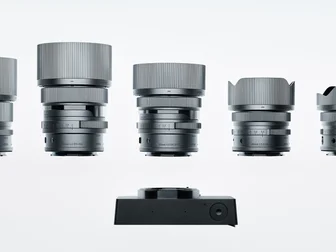
Executive Overview: The Philosophy of Radical Reduction
In a camera industry dominated by increasingly bulky, feature-laden hybrid bodies, Sigma chose a radically divergent path. Beginning with the introduction of the **Sigma fp** and **fp L**, Sigma pioneered an uncompromising philosophy of **minimalist, modular design**.
Instead of dictating how a camera should look or handle, Sigma stripped the 35mm mirrorless body down to its absolute elemental core: an ultra-compact, rectangular aluminum block housing a full-frame sensor, a lens mount, and a processing engine. Everything else—viewfinders, handgrips, flash units, and battery cages—is modular and customizable by the creator.
This technical analysis explores the engineering innovations, cooling solutions, and architectural principles behind Sigma's minimalist full-frame platform, and explains how it continues to inspire compact camera design across the L-Mount Alliance.
The Four Engineering Pillars of Sigma's Minimalist Architecture
``` +------------------------------------------------------------------------+
Sigma's Radical Modular Architecture
+------------------------------------------------------------------------+
| |
v v v v [ 100% Electronic ] [ Sandwich Heat Sink ] [ Modular Skeleton ] [ CinemaDNG RAW ] Zero Mechanical Shutter Passive Silent Cooling 1/4"-20 Mount Points 12-Bit Direct to SSD Zero Shutter Shock Zero Fan Noise Infinite Rig Options Uncompressed Color ```
1. Eliminating the Mechanical Shutter
The single largest mechanical constraint in camera design is the focal-plane shutter unit. It requires physical space, spring-tensioned electromagnets, and dampening mechanisms to absorb mechanical vibration.
Sigma eliminated the physical shutter entirely. By relying **100% on a high-speed electronic rolling shutter**, Sigma achieved two breakthrough benefits: - Reduced body depth to an astonishing **45.3 mm (1.78 inches)**. - Eliminated shutter shock and mechanical curtain wear completely, creating a 100% silent camera. - *Engineering Trade-off:* Flash synchronization is limited to 1/30s (or 1/15s in 14-bit RAW on fp L), and fast lateral panning can produce rolling shutter distortion.
2. The Magnesium Sandwich Heat Sink
How do you dissipate heat from a full-frame sensor recording continuous 4K video in a pocket-sized body without an internal fan?
Sigma engineered a massive **corrugated aluminum heatsink** directly sandwiched between the rear LCD display and the main circuit board. The exterior vents around the perimeter allow heat to passively radiate outward via natural thermal convection. The camera operates completely silently, with zero moving parts, making it a favorite for soundstages, quiet theater sets, and audio-critical interviews.
3. Universal 1/4"-20 Thread Modular Rigging
Traditional cameras feature strap lugs that get in the way of tripod plates and cages. Sigma replaced strap lugs with three robust **1/4"-20 steel screw threads** (one on the left, one on the right, and one on the bottom). - To use a neck strap, you screw in Sigma’s heavy-duty strap holders. - To build a shoulder-mounted cinema rig, you bolt cheese plates, top handles, or matte box rods directly to the camera’s magnesium body shell without needing a third-party cage.
4. Direct CinemaDNG RAW Capture to External USB-SSD
Rather than forcing videographers to buy expensive proprietary cinema media, Sigma engineered the camera to format and stream uncompressed **12-bit CinemaDNG RAW video directly to external USB-C SSDs** (such as a Samsung T7 Shield). This delivers maximum color grading latitude and highlight retention at a fraction of typical cinema production media costs.
Why the Minimalist Modular Concept Endures in 2026
1. **The Ultimate Director's Viewfinder:** Using Sigma's built-in **Director's Viewfinder mode**, cinematographers can simulate the exact aspect ratios and optical coverage of major cinema cameras (including ARRI ALEXA LF, RED MONSTRO 8K, and Sony Venice 2), making it the premier pre-visualization tool on Hollywood sets. 2. **Gimbal and Drone Versatility:** At just **370 grams (body only)**, a Sigma modular body can be mounted to ultra-compact drone gimbals or motorized cable cams that cannot support full-sized cinema bodies. 3. **Purity of Photographic Focus:** For street and documentary shooters, mounting a tiny Sigma I-series prime (like the 45mm f/2.8 DG DN) transforms the camera into a minimalist photographic sketchbook that slips easily into a coat pocket.
Summary: The Lasting Impact on the L-Mount Ecosystem
Sigma’s minimalist modular platform proved that full-frame sensors do not require gigantic, bulbous DSLR-style bodies. By challenging conventional assumptions about viewfinders, grips, and shutters, Sigma created a timeless design language that continues to influence compact full-frame cameras—including Panasonic's Lumix S9—across the L-Mount Alliance.