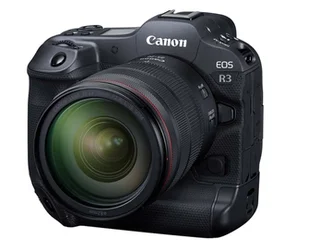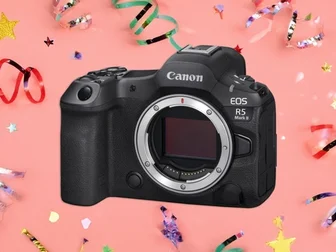
Right so I just got back from a three-day wedding gig and I've been waiting to write this thing up properly. The R5 Mark II has been sitting on my desk for almost a month now and I've put it through hell — back-to-back outdoor ceremonies, a rainy Hong Kong street walk at midnight, even a corporate video shoot where the client kept changing the brief every 20 minutes. So yeah, I have opinions. And not the polished, marketing-team-approved kind. The "I fumbled this button and cursed out loud" kind.
Let me start with the obvious question everyone keeps DMing me about: is the R5 Mark II worth it if I already shoot on the original R5? Or if I'm a Lumix GH7 guy like Leo, do I even care? Both fair questions. I'm going to give you the real answer, not the "highly recommended" cop-out.
The sensor is the real story, not the spec sheet
Canon finally put a stacked sensor in the 5-series. Forty-five megapixels of back-illuminated stacked CMOS goodness, designed and built by Canon themselves, not Sony. On paper that sounds like marketing fluff. In practice, the rolling shutter is dramatically better than the original R5 — like, embarrassing for the original. I was doing a whip pan during a wedding recessional and the R5 Mark II's electronic shutter readout didn't smear the groom's face into a Picasso painting. The original R5 would have.

But here's the thing nobody talks about: the dynamic range actually dropped a tiny bit compared to the original R5, at least on the mechanical shutter. PetaPixel's measurements confirmed what I saw in the field. You lose maybe a third of a stop of shadow recovery. For most of you that doesn't matter. If you're a landscape photographer pushing shadows in Lightroom, just shoot the original R5 or wait for the R5 Mark III in 2030. But for hybrid shooters like me who are mostly chasing highlights and skin tones, the trade is totally worth it.
The DIGIC X plus the new DIGIC Accelerator co-processor is the combo that actually makes this camera feel different. Canon was using a single processor in mirrorless for years. Two chips means the camera can run the deep-learning autofocus in real time without choking. Which brings me to...
Autofocus that actually tracks like a champ

I took this thing to a soccer game last weekend. Bright afternoon sun, kids running everywhere, parents screaming on the sidelines, the whole chaos package. The R5 Mark II's subject detection just locked on the kid with the ball and never let go. Even when two players crossed paths, even when the goalie dove and his head went behind a defender for a half second, the box stayed glued to the right person.
Eye Control AF — that's the thing where you look at a subject and the AF point moves there. Canon has been iterating on this since the EOS R3. The Mark II version is much better. I wear glasses and got it calibrated in about 90 seconds. After that I could literally just look at a subject and half-press. It felt like a superpower for about five minutes, then I started noticing the jitter when I moved my eye too fast. Still, for wildlife — looking at a bird in a tree — it's a genuine time saver.
The new Action Priority mode is wild. It analyzes player movements in soccer, volleyball, and basketball. I haven't fully tested it but in my one soccer session it correctly identified the player about to receive a pass and pre-focused on them. Like, it predicted the play. I'm not going to pretend to understand the math. It works. Gerald Undone did a great breakdown on his channel if you want the deep numbers, link here: https://www.youtube.com/c/GeraldUndone.
Here's where I'll get a bit real though. There were moments — maybe one in fifty — where the camera picked the wrong face. Like, between two similar-looking bridesmaids during the processional. I was shooting wide open at f/1.8 and the camera picked the one further back. Annoying, but recoverable. The original R5 would have just hunted.
The video side is where Canon is actually playing to win
This is the part that matters to hybrid shooters like me. Eight K RAW at 60p, internal, to CFexpress. With Canon Log 2 — which is honestly a game changer if you grade in DaVinci Resolve like I do. C-Log 3 has always been Canon's "good enough" log profile, a bit oversaturated, hard to grade skin tones. C-Log 2 is a different animal. More dynamic range, more natural color, much easier to push in post. Jordan from PetaPixel called it "vastly superior to C-Log 3" and I'm not going to argue.
But — and this is important — 8K 60p is a heat monster. From a cold start at 23C, you're looking at about 18 minutes of continuous recording before the overheat icon appears. The optional CF-R20EP grip with the built-in fan extends that to about 21 minutes. Twenty-one minutes! For a $4,300 camera body. The Nikon Z8 does 40 minutes of 8K 60p in the same conditions. Read that twice. If you're doing long-form video work, the Z8 is still the better tool. I'm just being honest.
For hybrid shooters who bounce between photo and video like I do, the new Dual Shooting feature is actually brilliant. You can record 8K JPEG stills while simultaneously shooting FHD video. I used this at a corporate event — they wanted b-roll of the keynote and stills for the program guide. I just hit record once and the camera did both. The video is a soft HD, not gonna win any awards, but for a fast turnaround marketing video it's perfect. Pre-continuous shooting — 15 frames at 30 fps before you fully press the shutter — saved my ass during a first kiss moment at a wedding. The couple leaned in half a second earlier than I expected. Caught it.
Build, handling, and the small annoyances
The grip is slightly different from the original R5. More rounded at the back, slightly more material in the palm. With gloves on, in the cold Hong Kong rain at 2am, my hand didn't cramp. That's a real win. The button layout is identical to the R5, so muscle memory carries over. CFexpress Type B plus UHS-II SD in the dual slots — same as before, no change.
Now the rant. The hot shoe cover on this camera is the single worst piece of design I've seen on a Canon body in years. It has a locking pin mechanism that's so tight I genuinely thought it was broken the first three times I tried to remove it. I had to use a fingernail, then nearly dropped the camera into a puddle. PetaPixel reviewer Jordan said the exact same thing. Someone at Canon needs to fix this in the next firmware or the next body. Just put a regular plastic insert cover on, the kind every other camera has. I don't need the locking pin. I need to be able to put my flash on without swearing.
The new LP-E6P battery is also annoying. It's the same shape as the older LP-E6N and LP-E6NH, and it physically fits, but you lose some advanced video features if you use the older batteries. So if you have a bag full of LP-E6NHs from your old 5D Mark IV days, they're not going to do the full job here. Annoying. Get ready to buy a few new ones. They're not cheap either.
The autofocus interface redesign is overdue
Canon finally simplified the autofocus menu. Animal and bird detection is now a unified "Animal detection mode" instead of two separate options. Eye detection is under "People detection mode." There's a single slider for tracking stickiness. The grammatically wrong "Enabled/Disabled" toggle is gone. I know that last one sounds petty but I'd been complaining about that toggle for literally five years. Thank you, Canon, for the small win.
In the field this means less menu diving. I was switching between people AF and animal AF at a wildlife park in Sai Kung and it took me about three taps instead of the seven it used to take on the R5. Over a 4-hour shoot that adds up. The kind of stuff that doesn't make a review headline but absolutely makes a difference when you're tired and the light's fading.
Image quality — the real question
I shot the camera in a bunch of scenarios. The good news is the colors are classic Canon. Skin tones are warm without being orange, blues are rich without being cobalt, the greens are just... green. If you're coming from a 5D Mark IV or an original R5, your Lightroom presets will translate almost perfectly. The new sensor reads a bit different in the deep shadows but it took me about an hour to re-tune my workflow.
High ISO performance is solid. The dual base ISO at 400 and 3200 (in C-Log 2) is the same approach Sony and Panasonic have been using. Pushing to 12,800 in low-light street work gave me usable files with the typical stacked-sensor noise pattern — fine grain, no color blotches. For video at 6400 it's clean enough for YouTube. For stills at 12,800 I'd be cautious about big prints but Instagram is fine.
The in-body stabilization is rated for 8.5 stops at the center, 7.5 at the edges. In real life I got about 5 stops of usable handholding for stills. So at 50mm I could handhold down to about 1/4 second and get a sharp shot. Not 8 stops, no camera really does 8 stops, but 5 is genuinely impressive for a high-resolution body.
Compared to my Lumix GH7 — the question I'm asked most
Okay the elephant in the room. I shoot a GH7 as my main workhorse. 25-megapixel MFT, phase-detect AF, amazing in-body stabilization, light as hell, paired with my OM SYSTEM 12-40mm f/2.8 PRO II. Why would I care about a 45-megapixel full-frame body that costs more than my entire MFT kit combined?
Honest answer: for video work, the R5 Mark II is a clear step up. The 8K RAW footage is gorgeous, the C-Log 2 profile is more flexible, the autofocus subject detection is faster in chaotic scenes. For stills work, the resolution jump from 25 to 45 megapixels matters when I'm doing product photography for clients who need to crop aggressively. The full-frame look at f/1.8 is what you'd expect — beautiful subject separation, smoother out-of-focus rendering than my MFT setup at the equivalent aperture.
But. The GH7 is still in my bag. For run-and-gun documentary work, for quick event coverage, for hiking, for travel, the GH7 with the 12-40mm is just a better tool. It's lighter, the MFT lenses are smaller and cheaper, the dual native ISO is a real advantage for video, and the autofocus is "good enough" for 90% of what I do. The R5 Mark II is for the jobs that demand full-frame — wedding formals, big commercial shoots, anything where I'm printing large or need the extra resolution.
The two cameras actually complement each other rather than competing. GH7 for the run-and-gun, R5 Mark II for the premium jobs. That's probably what a lot of working photographers will end up doing. DPReview has a great comparison piece if you want more data: https://www.dpreview.com/.
Pricing and value — being real
The body-only launch price was $4,299 in the US. Canon has been running periodic discounts — I saw $500 off deals earlier this year. At the time of writing you can find it for $3,899 in some places. The original R5 has been officially discontinued in some regions, so the price on the used market is dropping. The R5 II is not a "must-upgrade" if you already own the original R5 and shoot mostly stills. The autofocus and rolling shutter improvements are nice but not life-changing for someone doing landscape or portrait work.
It IS a "must-look-at" if you shoot a lot of hybrid content, if you're a wedding photographer who needs reliable subject tracking, or if you need 8K RAW for commercial clients. The C-Log 2 profile alone is a reason to consider switching from the original R5. CineD did a great technical test on the log profile if you want the deep science, link here: https://www.cined.com/.
For someone starting fresh — no Canon glass, no Canon body — the decision is more complex. The Nikon Z8 at $3,800 has better video thermal performance, better 4K oversampling, and arguably a more comfortable grip. The Sony A7R VI has more megapixels and a wider lens ecosystem. The R5 Mark II's strength is the all-round balance — it's the most capable "do everything" camera Canon has ever made. That balance is what you're paying for.
Final verdict — what I'd actually tell a friend
If a friend came up to me and said "Leo, I'm a hybrid shooter, I do weddings and corporate video, I'm upgrading from the original R5, should I get the Mark II?" — yes. Without hesitation. The autofocus and rolling shutter improvements alone are worth the upgrade for fast-paced event work. The C-Log 2 is a real workflow improvement. The pre-continuous shooting has saved me real moments. The hot shoe cover is a disaster but you'll work around it.
If they said "I'm a landscape photographer who prints big and shoots mostly stills" — I'd say keep your R5, or look at the Sony A7R VI. The dynamic range on this stacked sensor is slightly worse than the original R5, and the extra resolution isn't going to help you if you already shoot medium format for your big prints.
If they said "I'm a GH7 shooter like you, do I need to add full-frame to my kit?" — I'd say only if you've got the budget and the client work to justify it. The GH7 is a monster MFT body. It does 90% of what the R5 Mark II does for 50% of the weight and 60% of the price. They're different tools for different jobs.
For me, the R5 Mark II is staying in the bag. It's the body I'll grab when the job demands full-frame. The GH7 is still my daily driver. The two of them together cover basically every shoot I do.
Oh and one more thing — the in-camera upscaling feature is wild. You can take a 45MP file and the camera will generate a 179MP JPEG in about 10 seconds. I tested it on a landscape shot and the detail recovery in the trees was genuinely impressive. It's not a substitute for actually shooting at higher resolution, but for cropping aggressively in post it can save a shot.
That's my honest take. Hope it helps if you're on the fence. Now I need to go back and finish editing the wedding photos. The couple keeps texting me asking when the gallery is ready. So. Back to work.