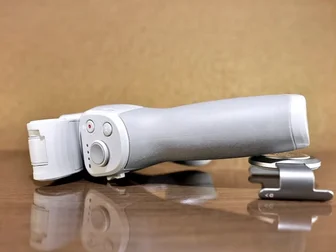
Executive Overview: The Pocket Camera That Changed Content Creation
When DJI launched the **Osmo Pocket 3**, it transformed solo video production. Previous generations were compromised by tiny 1/1.7-inch sensors, cramped 1-inch displays, and mediocre low-light capture.
By integrating a massive **1-inch CMOS sensor**, a rotatable **2.0-inch OLED touchscreen**, 10-bit **D-Log M color**, and native digital pairing with the **DJI Mic 2**, the Pocket 3 established itself as the premier tool for travel filmmakers, YouTube vloggers, and mobile journalists.
Because of this unprecedented success, speculative rumors frequently surface claiming that an "Osmo Pocket 4" is right around the corner, promising speculative features like 8K video, optical zoom, or waterproof gimbal joints.
However, designing an ultra-compact gimbal camera is constrained by the strict laws of **thermodynamics, brushless motor torque, and optical physics**.
This guide delivers an authoritative long-term evaluation of the Osmo Pocket 3's real-world operational performance, examines why it remains so dominant in 2026, and provides a sober, engineering-focused breakdown of what a true next-generation Pocket camera can realistically achieve.
The Engineering Triumphs of the Osmo Pocket 3
To understand the high bar set for any future successor, consider why the Pocket 3 continues to outsell both traditional smartphones and action cameras for handheld video:
+-------------------------------------------------------------------------+
|                    DJI OSMO POCKET 3 HARDWARE STACK                     |
|                                                                         |
|  [OPTICAL HEAD]        1-inch CMOS Sensor (9.4MP Effective)             |
|                        20mm f/2.0 equivalent prime (92.1° FOV)          |
|                        3-Axis Miniature Brushless Gimbal                |
|                                                                         |
|  [INTERFACE]           2.0-inch Rotatable OLED Display                  |
|                        Instant 90° rotation for 16:9 or 9:16 vertical   |
|                                                                         |
|  [AUDIO ARCHITECTURE]  3-Mic Omnidirectional Array                      |
|                        Built-in 2.4GHz receiver for DJI Mic 2 (32-bit)  |
|                                                                         |
|  [THERMAL CORE]        Integrated aluminum chassis heatsink             |
|                        Fast-charging battery (80% in 16 minutes)        |
+-------------------------------------------------------------------------+
1. Mechanical 3-Axis Gimbal vs Electronic EIS
Most creators assume modern smartphones and action cameras have made mechanical gimbals obsolete through Electronic Image Stabilization (EIS) like GoPro HyperSmooth or DJI RockSteady.
However, EIS has severe physical flaws: - **Severe Cropping:** EIS cuts 10% to 25% of the sensor's field of view to create a buffer zone for digital shifting. - **Low-Light Smear:** In dim lighting, long exposure shutter speeds ($1/50s$) combined with electronic warping cause motion blur inside each frame, creating distracting jitter artifacts. - **Physical Isolation:** The Osmo Pocket 3’s 3-axis mechanical gimbal physically stabilizes the camera sensor in space. The shutter fires cleanly, producing crisp, cinematic night-walk footage without digital warping or artificial sharpening.
2. The 1-Inch Sensor Revolution
The jump from a 1/1.7-inch sensor to a true 1-inch format increased surface area by nearly **300%**. Combined with an $f/2.0$ aperture, this provides: - Genuine optical depth of field with natural background fall-off when filming close subjects. - Clean low-light performance up to ISO 3200 with minimal chroma noise. - Full 10-bit D-Log M and HLG recording, delivering 11+ stops of dynamic range that match seamlessly with professional drone and mirrorless footage in post-production.
3. Rotatable 2.0-inch OLED Human Interface
The rotating screen mechanism serves as both a power switch and an instant aspect-ratio selector. Twisting the screen clockwise powers the camera on in under 1.5 seconds into landscape 16:9 mode. Twisting it vertically switches instantly to a 3K vertical crop optimized for TikTok, Instagram Reels, and YouTube Shorts.
Long-Term Telemetry: Real-World Limitations
Despite its brilliance, two years of heavy field use have revealed specific hardware limits that define the boundaries of the form factor:
1. Thermal Thresholds During Sustained 4K/60p and 4K/120p
The Pocket 3 relies entirely on passive thermal conduction through its aluminum handle and rear heatsink vents. In ambient temperatures above 30°C (86°F), continuous recording in 4K/60p can cause the body to become hot to the touch, eventually triggering an overheating safety shutoff after 45 to 60 minutes.
2. Fixed Focal Length & Parallax Limits
The fixed 20mm equivalent focal length is ideal for arm's-length vlogging. However, it lacks reach for distant subjects. While digital zoom is available (2x lossless crop in 1080p), there is no true optical zoom.
3. Vulnerability to Dust and Water
Unlike rugged action cameras (e.g., DJI Action 5 Pro), the open mechanical joints and delicate flex cables of the 3-axis gimbal cannot be weather-sealed. A sudden rainstorm or fine beach sand will quickly destroy the gimbal motors.
Technical Comparison Matrix: Vlogging Form Factors
Specification / Feature | DJI Osmo Pocket 3 | DJI Action 5 Pro | Smartphone + Mobile Gimbal | Sony ZV-E10 II (Mirrorless)
**Sensor Format** | 1-inch CMOS | 1/1.3-inch CMOS | 1/1.3-inch to 1-inch | APS-C (26MP BSI CMOS)
**Stabilization** | 3-Axis Mechanical Gimbal | RockSteady 3.0+ (EIS) | Motorized 3-Axis Gimbal | Electronic Active SteadyShot
**Low-Light Cleanliness** | Outstanding (True 1-inch) | Good (Computational) | Fair to Good (AI noise) | Superior (Interchangeable f/1.4)
**Dynamic Range** | 10-bit D-Log M / HLG | 10-bit D-Log M | 10-bit HDR / Dolby Vision | 10-bit S-Log3 / S-Cinetone
**Total Carry Weight** | **179g (All-in-one)** | 145g | ~650g (Phone + Gimbal) | ~550g (Body + 16-50mm lens)
**Setup Time** | **1.5 seconds (twist screen)** | 2.0 seconds (press power) | 45–90 seconds (mount & clamp) | 5.0 seconds
**Water / Sand Resistance** | None (Exposed motors) | **20m bare machine waterproof** | Case dependent | Dust and moisture resistant
**Street Price (Nov 2026)** | $519 Base / $669 Combo | $349 Base / $449 Combo | $150 (Gimbal only) | $998 (Body only)
The "Pocket 4" Architecture Wishlist: Physics vs Hype
When evaluating speculative rumors for a future Pocket successor, here is what is technically feasible versus pure fantasy:
[WHAT IS PHYSICALLY FEASIBLE]                [WHAT IS UNREALISTIC HYPE]
• Micro Four Thirds (MFT) Sensor Crop:       • 8K Video Recording:
  Feasible with larger brushless motors,       Generates 25W+ heat; would trigger
  though head weight increases by ~35%.        thermal shutdown in under 3 minutes.

• Built-in Variable ND Filter:               • 3x Optical Zoom Mechanism:
  Liquid crystal electronic ND (similar to     Adding moving glass elements creates
  Sony FX6) is theoretically possible,         severe weight imbalance that tiny
  though costly and fragile.                   gimbal motors cannot calibrate.

• Enhanced ActiveTrack 7.0:                  • Submersible IP68 Waterproofing:
  More powerful onboard NPU for full-body      Open mechanical pan/tilt brushless
  occlusion tracking in crowded spaces.        bearings cannot be sealed airtight.
Buying Advice: Should You Buy the Pocket 3 in 2026?
If you are waiting on the sidelines for an unannounced "Pocket 4" based on speculative online rumors, you are missing out on one of the finest video tools ever manufactured:
- **The Osmo Pocket 3 remains fully competitive.** Its 1-inch sensor, 4K/120p slow motion, pristine 10-bit D-Log M, and seamless DJI Mic 2 integration represent a level of performance that satisfies commercial YouTube creators and documentary crews worldwide. - **For rugged adventure, extreme sports, or underwater diving:** Skip the Pocket series entirely and purchase a dedicated action camera like the **DJI Action 5 Pro** or **GoPro Hero 13 Black**. - **For solo travel creators and daily vloggers:** The **DJI Osmo Pocket 3 Creator Combo** remains the gold standard of portable, stabilized video capture.