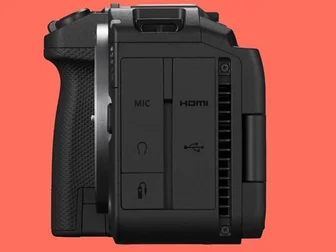
Canon just dropped the EOS R6 V and I genuinely did not see this one coming — at least not this fast. It was only in March that the R6 Mark III launched, and here we are in May 2026 with a "V" version that's basically a different camera aimed at a different audience. The V stands for video, and Canon is not being subtle about it.
The headline specs are wild for a $2499 body. 32.5MP full-frame CMOS sensor — same one as the Cinema EOS C50 and the R6 Mark III, which means the files will be familiar to anyone in the Canon ecosystem. 7K60p RAW internal recording, 4K120p, 2K180p, and a 7K Open Gate 3:2 mode that filmmakers have been begging for. Built-in active cooling fan with Off / On / Auto modes and adjustable RPM. No EVF. No mechanical shutter. No, seriously — Canon REMOVED the EVF and the mechanical shutter to make room for the fan, the cooling vents, and a deeper grip with a built-in vertical tripod mount.
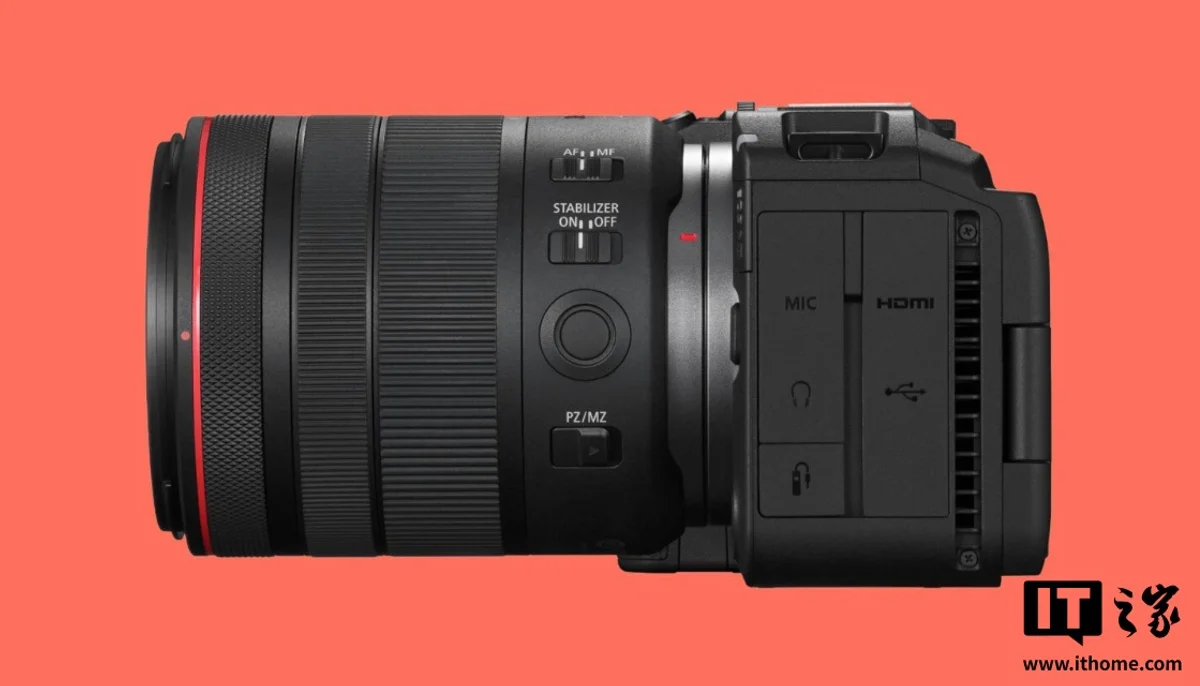
This is the most polarizing design choice Canon has made in years. The lack of an EVF means anyone doing stills work — weddings, sports, family, photojournalism — is going to be immediately turned off. You only get a 3.0-inch 1.62M-dot fully articulating LCD for composing. For run-and-gun video work, that's actually fine. For stills in bright daylight, it's a deal-breaker. Canon knows this. They are deliberately targeting the V-series at hybrid video creators, YouTubers, and indie filmmakers, not traditional photographers. The R6 V is the successor to the R50 V and the PowerShot V1 in Canon's "V" lineup — a separate vertical from the regular R-series.
In exchange for losing the EVF, you get: 7K60p Light RAW internal (Standard RAW up to 30p), 4K DCI/UHD up to 60p oversampled, 4K up to 120p with audio, 2K up to 180p, C-Log 2 AND C-Log 3 (both at the same time, finally), 4:2:2 10-bit internal recording, up to 1200 Mbps for 4K Intra, and a fan that can essentially eliminate thermal throttling at most resolutions. Canon claims 4K DCI 59.94p Standard Long-GOP with fan on has no recording time limit at 23°C. In 7K Light RAW + 2K proxy mode, fan-off recording is about 33-37 minutes, fan-on extends to over 2 hours.
IBIS is rated 5-axis, with up to 7.5 stops center / 7 stops edge in coordination with stabilized RF lenses. Movie Digital IS has three modes: Standard, Enhanced, and Subject Tracking — the last one crops tighter to keep a specific subject stable. Battery is the new LP-E6P (the R6 III introduced this), with about 1 hour 10 minutes of 7K60p or 4K60p recording. USB-C PD is supported for external power.
The body is compact: 141.8 × 83.3 × 79.8mm, 688g with battery and card. The grip has a dedicated vertical tripod mount, a top-mounted zoom rocker (for power zoom RF lenses like the new RF 20-50mm f/4L IS USM PZ), a tally lamp, and a front-facing record button. The LCD UI auto-rotates when you shoot vertical. The recording indicator turns the screen border red. It's all very creator-first design.
Dual card slots: one CFexpress Type B (VPG400, up to 8TB cards supported), one UHS-II SD. Finally Canon put a real CFexpress slot in a $2499 body. Storage: relay, main + proxy, main + secondary, or simultaneous backup. The CFexpress Type B is cheaper than Sony's Type A cards, which is a small but real win.

Pricing is $2499 USD / €2499 / ¥13999 (Chinese market). The kit with the RF 20-50mm f/4L IS USM PZ is $3699. US availability is now, Europe late June, Asia July. DPReview's initial hands-on called it "the most complete video-first full-frame camera under $3000." RedShark's coverage of the 7K RAW capabilities and active cooling noted that "Canon has clearly designed this for filmmakers who don't want to spend C70 money but need C70-class features."
For most people reading LensClear, this isn't the camera for you. If you shoot a mix of stills and video, get the R6 Mark III or wait for the R5 Mark II price to drop. If you're a pure stills shooter, the lack of EVF and mechanical shutter is disqualifying. But if you're a video creator who's been eyeing the Sony FX3 or the Canon C50 but couldn't justify the price, the R6 V is the most compelling sub-$3000 full-frame video camera Canon has ever made. It might be the most compelling sub-$3000 full-frame video camera period.
I'll have a full review once I get one in for testing. Until then, the V series has officially arrived.