Friday News, October 2: The FCC Just Banned DJI Chips in New US Drones, Adobe Closes the Topaz Acquisition, Imagen Rethinks Cull-Then-Edit, and Apple Adds Crypto-Signed Reference Photos
Five stories that didn't each get their own article this week, and one that's actually pretty major. The pattern is the same on every side: regulators are starting to make rules, AI tools are starting to swallow workflows, and the big software companies are starting to acquire the small software companies.
Here's what landed.
The FCC Just Banned DJI and Autel Chips in New US-Built Drones — Effective October 13
The FCC's Third Report and Order (FCC 26-50) was published in the Federal Register on September 11. The rule takes effect October 13, 2026, and it's narrower than the headlines suggest — but narrower is also harder to work around. What it actually does: blocks new equipment authorizations for any drone containing logic-bearing components (flight controllers, radio modules, camera boards, gimbal controllers) made by a company on the FCC's Covered List. DJI and Autel are both on that list.
The twist, as DroneXL spells out: the rule attaches to the company that *made the chip*, not to where the drone is assembled. A drone built fully in the US, even one that qualifies as Buy America or Blue UAS, can still be rejected by the FCC if one internal circuit traces back to DJI. Already-authorized equipment is unaffected, and pending applications filed before October 13 are grandfathered in. Models already on shelves stay on shelves — DJI confirmed that spare parts and replacements are unaffected. (Camerajabber, DroneXL)
What I'm watching here: nobody in the major US drone world has a fully homegrown chip stack yet. For most of us nothing changes today. The shelf prices of currently-available DJI drones are about to behave like a discontinued part.
Adobe Closed the Topaz Labs Deal on September 23 — and Promised to Keep Topaz as a Standalone Brand
Adobe formally completed its acquisition of Topaz Labs on September 23, 2026, three months after the original June 25 announcement. The deal brings Topaz Video AI, Topaz Photo AI, Topaz Gigapixel, and the underlying image-enhancement models into the Adobe Digital Video and Audio team. Topaz CEO Eric Yang moves with the team. The Topaz brand stays. The standalone apps stay.
Adobe's stated rationale: integrate Topaz's upscaling and restoration models directly into Photoshop, Lightroom, and Premiere, and stop making customers bounce between tools. The press release leans hard on the Emmy for Technology & Engineering Topaz won in 2025 for its video models. (Adobe Newsroom, Newsshooter)
For working photographers, the honest answer is: nothing changes tomorrow. The standalone Topaz Photo AI you bought last year still opens on your desktop. The question worth asking is what Adobe's subscription pricing does in 2027. Adobe's pattern with past acquisitions is to keep the standalone product alive until the integration point ships, then quietly stop updating it. If you rely on Topaz Photo AI for any production-critical denoising or upscaling, this is the moment to learn the equivalents in Photoshop's Neural Filters and Lightroom's Denoise.
Imagen Just Killed the Cull-Then-Edit Workflow — On Purpose
Imagen started pushing a beta of "Intelligent Studio" on September 29, 2026. The change isn't a new AI model. It's a workflow rewrite. Until now, Imagen's editing sat downstream of culling — you cull in Imagen, export to Lightroom, edit, bounce back to Imagen if you wanted a second culling pass. Intelligent Studio puts both culling and editing in the same project, with no fixed order. Cull, edit, return for a second cull, filter to a single moment of the day, edit only those frames.
The other change: pricing moved to export-based. Pay-As-You-Go is $7/month base plus $0.05 per photo on export. The Limitless plan stays $129/month annual, unchanged. The point of export-based pricing is that the workflow only works if you can experiment without paying for every AI tool you touch — pay when the image actually leaves the app. Imagen says eligible users get a download link to upgrade their existing Imagen app, no separate sign-up. (PhotographyTalk, Imagen blog)
This is the part of the year I've been waiting for from Imagen. Culling and editing have always been the two halves of a wedding photographer's day that don't talk to each other, and every "AI post-production" pitch for the last three years has basically been a faster Lightroom. If Intelligent Studio actually holds up — and that's a meaningful "if" — this is the first time the industry is treating culling and editing as one job, not two.
Canon's PTZ Cameras Get Face Registration Tracking in Mid-October
Canon announced a firmware update for its PTZ (pan-tilt-zoom) broadcast cameras, scheduled for mid-October 2026. The headline addition is auto-tracking with face registration — the camera locks onto a registered face and follows it across the frame as the subject moves. The same firmware adds internal recording, simultaneous streaming while recording, and the usual "operational stability" items. (Canon Rumors, Canon Imaging Asia)
This is broadcast / live-event gear, not stills — but it matters to anyone who shoots conferences, weddings, or houses of worship, because PTZ operators have been the most under-served segment of the "I need autofocus that follows a face" market for years.
The Photoworks Festival Opens in Brighton Today
The Photoworks Festival — formerly the Brighton Photo Biennial — opens across Brighton and Hove today and runs through November 1. Fourteen exhibitions, a one-day conference, a month of talks, workshops, and portfolio reviews. The theme this year is "Un/Stable: Lands, Anxieties, Dreams." Opening days (October 2-4) are free for the exhibitions. (Photoworks, Camera Jabber)
Apple Reference Image Is Real and Your Phone Camera Now Signs Its Own Pixels
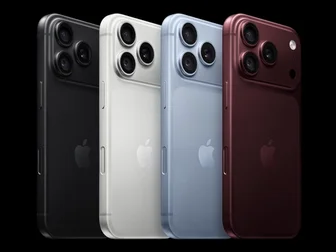
Apple published the architecture behind "Reference Image" on September 15, six days after introducing the feature with the iPhone 18 Pro. Reference Image is opt-in, and it's a meaningfully different answer from Content Credentials. The sensor itself signs the pixels at capture — using a composite post-quantum signature (RSA-3072 plus ML-DSA-87) — and Apple holds the keys inside the Secure Enclave. The output is a signed DNG digital negative that an Apple-only client can verify at any point in the future, even against a quantum adversary.
The limitations are real. Reference Image is verifiable on Apple devices only. There is no public verifier, no API, no third-party library. Content Credentials still works for cross-platform attribution. Reference Image is an answer to "is this pixel what the sensor said it was?" — not "who edited this file?". (Apple Security Research, DPReview opinion)
For working photographers, this is the most interesting piece of camera-adjacent news this week and the one with the longest tail. I haven't shot with an iPhone 18 Pro yet, but the architecture is worth reading if you care about photo provenance for any reason.
---
Three things I'm checking next week: whether the FCC's October 13 effective date quietly slips, how fast Adobe starts shipping Topaz integration in Creative Cloud, and whether the Imagen Intelligent Studio beta hits general availability before Adobe MAX (November 10-12 in Miami Beach).