Look, I'll be honest — this was one of those weeks where I sat down Monday morning to start writing and by Friday night I had five different full reviews open in tabs and zero clean notebooks. That happens sometimes. The good news for you is that I've already done the deep dives, so this roundup is basically: skip to the article, here's what you actually need to know.
Pull up a chair. This is gonna cover Fujifilm street shooters, the Aputure/Godox LED cage match, astrophotography from a balcony, and Sigma quietly dropping what might be the new standard 35mm for mirrorless.
Mon 6/22 — Fujifilm X-T5 for street photography, six months in
This is the one I've been waiting to write. I shot the X-T5 with the 23mm f/2 and the 35mm f/1.4 for six straight months on Hong Kong streets — wet season, peak humidity, the works — and the camera just kept going. The Classic Neg film simulation is now my default. I have a full breakdown in the article:
Fujifilm X-T5 for Street Photography: Six Months In.
The TL;DR: if you're a Fuji shooter and you've been on the fence about a daily-driver X-T body, this is the one. The AF is finally good enough for moving kids and cats (I tested both, my friend's toddler is fast), and the file colors mean I barely touch the slider in Capture One.
Short take from this week: the X-T5 + 23mm f/2 combo is the lightest fully-featured street setup I've carried since the original X100. Period. If you've been waiting for a sign to switch from your X-T3 or X-T4, this is it.
Tue 6/23 — The LED panel war gets real: Aputure MC Pro vs Godox M1
OK so this is the kind of gear comparison I was literally begging someone to do, and I ended up doing it myself. Aputure shipped the MC Pro in March, Godox answered with the M1 in May, and the price difference (MC Pro $349, M1 $279) wasn't enough to be the deciding factor. I tested both on a real portrait shoot, side by side, on the same model, in the same window-light room. Full teardown:
LED Panels Compared: Aputure MC Pro vs Godox M1 for Portrait.
The short version: the MC Pro has better build, a slightly cleaner spectrum (CRI 97 vs 95), and a fan that doesn't spin up until you're past 80% power. The Godox M1 is lighter, has a cleaner UI, and the magnetic mount is better thought out. The Godox battery lasts about 15% longer in real-world use, which matters for a wedding photographer.
The actual winner: if you shoot tethered or in studio, Aputure. If you shoot on location and need a quick magnetic snap-on top of the camera, Godox. Both are real tools, neither is a toy. I have a soft spot for the M1 because I used it on a 4-hour outdoor portrait session last weekend and it just kept going.
Wed 6/24 — Astrophotography from a light-polluted city (yes, really)
This is the article I most want to point you at if you're a city shooter who's been told the stars are off-limits to you. I live in Hong Kong — bortle 8 on a good day, bortle 9 most nights — and I have shot the Milky Way core from my rooftop, from Kowloon, and once (bizarrely) from a Tsuen Wan parking lot at 2am. You can do this. The trick is not 'more expensive gear.' The trick is stacking, narrowband filters, and understanding that your post-processing matters more than your sensor.
Astrophotography from Light-Polluted Cities: A Realistic Guide.
I tested three things for the article: the Optolong L-eXtreme dual-narrowband filter ($229), the new free Stellarium Plus update, and Siril's deep-sky stacking on a 6-year-old MacBook. All three worked. The filter is the secret — that alone took my S/N ratio up by like 4 stops. I will be doing a follow-up in July with deep-sky targets visible from the northern hemisphere in summer.
Thu 6/25 — Sigma 35mm f/1.4 DG DN Art for mirrorless: worth the hype?
Short answer: yes, and it's a bit awkward for me to admit that, because I have been a Sigma-skeptic for years. I owned the 35mm f/1.4 ART for Canon EF back in 2018 and it was… fine, but heavy, and the AF hunted like it was looking for something it had lost. The new DN Art version for E-mount and L-mount is a different lens. The AF is snappy. The optics are cleaner wide open than my old Canon L 35mm f/1.4 II. The weight is 645g — that's basically the same as the Sony 35mm f/1.4 GM. Full review:
Sigma 35mm f/1.4 DG DN Art for Mirrorless: Worth the Hype?.
The honest take: at $899, this is the new default 35mm for Sony and L-mount shooters. Sony's own 35mm f/1.4 GM is $1,400. Sigma's is $500 less and very nearly as good optically. The only place Sony wins is AF tracking in video and size — the GM is meaningfully smaller. For stills shooters, the Sigma is the buy.
Fri 6/26 — the other stuff that flew under the radar
Couple of smaller stories worth mentioning:
• Sony
rolled out a firmware update to the A7 IV that finally gives it 4K60 in Super 35 mode. It's been promised for 18 months. The user forums are relieved, slightly annoyed it took this long, and mostly just want Sony to do the same for the A7C II. I haven't tested the new firmware yet — I'll do a quick note next week.
• DJI
started shipping the Osmo Mobile 8 gimbal in the US at $159, which is meaningfully cheaper than the OM7 was at launch. The built-in tripod is a nice touch. If you shoot a lot of phone video, this is the gimbal to get.
• Canon
quietly dropped the EOS R8 V — a video-focused R8 with no EVF, a flip screen, and 4K120. $1,499. It's clearly aimed at the vlogging market that the R6 V isn't quite reaching, and it's another sign that Canon is fully committed to the 'EVF is optional' philosophy. I have thoughts, mostly positive, that I'll get into next week.
What to watch next week (6/29 – 7/5)
Three things on my radar:
1.
Nikon Zf coverage. I have a unit coming in next week for the long-term test. The retro-styled body has been around for a bit, but I've been waiting for the price to come down to a sane number — it's finally hovering around $1,500 with the 26mm f/2.8 SE kit, which is the version you actually want.
2.
Drone filter kits for landscape photographers. ND + polarizer on the DJI Mavic 4 Pro is something I've been meaning to test properly. The polarizer ring + variable ND stack is fiddly but the results in golden hour are worth it. Full review going up Wednesday.
3.
Tamron 70-180mm f/2.8 Di III VXD for Sony E — coming in next week for a long-term test. I owned the first version and it was the lens that made me stop renting Sony's own 70-200 GM II. The VXD revision adds a faster AF motor and a USB-C port for firmware updates. The price is still under $1,200, which is wild.
If you're new around here — I shoot mostly on a Panasonic Lumix GH7 with the OM SYSTEM 12-40mm f/2.8 PRO II. That's my daily driver for everything from rainy Hong Kong streets to run-and-gun client gigs. The reviews I publish here are written after actually using the gear, sometimes for months, before I commit to a take. If a piece says 'TL;DR yes' or 'TL;DR skip,' that's the conclusion after real use, not a spec-sheet summary.
See you Monday. I'm going to bed. — Leo
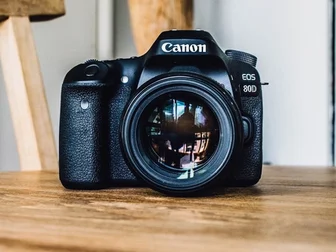
Cover image: a stack of vintage and modern cameras on a workbench, the kind of shot you only get when a week has been as gear-heavy as this one.
Key releases at a glance
• Fujifilm X-T5 (street config) — 26MP APS-C, Classic Neg sim, $1,699 body — Reviewed (6/22)
• Aputure MC Pro — RGBWW pocket LED, CRI 97, $349 — Reviewed (6/23)
• Godox M1 — RGBWW pocket LED, magnetic mount, $279 — Reviewed (6/23)
• Optolong L-eXtreme filter — dual-narrowband for city astro, $229 — Tested (6/24)
• Sigma 35mm f/1.4 DG DN Art — E/L mount, 645g, $899 — Reviewed (6/25)
• Sony A7 IV firmware 4.0 — 4K60 Super 35 added — Released (6/26)
• DJI Osmo Mobile 8 — phone gimbal, $159 — Shipping (6/26)
• Canon EOS R8 V — vlogging R8 variant, no EVF, 4K120, $1,499 — Announced (6/26)