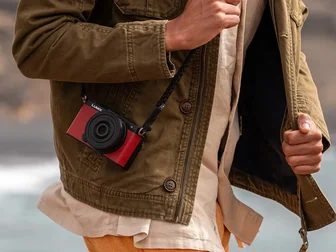
Quick Verdict & Strategic Overview
When Panasonic introduced the **Lumix DC-S9**, online camera communities were instantly divided. Some celebrated it as the ultimate pocket full-frame cinema body, while others labeled it a collection of frustrating compromises. In truth, the S9 is neither a flawed failure nor a universal camera: it is an uncompromisingly specialized device designed for a very specific type of content creator.
To understand whether the Lumix S9 "misses the mark" for your work, you must evaluate it directly against its two closest Panasonic stablemates: the **Lumix S5 II** (the full-featured full-frame hybrid workhorse) and the **Lumix GH7** (the uncompromised Micro Four Thirds cinema flagship). Each represents a radically different philosophy of video and photo capture.
Camera | Core Philosophy | Best Use Case | 2026 Used Price
**Lumix S9** | Ultra-compact full-frame creator tool | Mobile-first content, travel vlogs, street snaps, instant LUT grading | **$1,050 – $1,180**
**Lumix S5 II** | Full-featured hybrid workhorse | Commercial video, weddings, portraits, long-form interviews, all-weather stills | **$1,350 – $1,480**
**Lumix GH7** | Dedicated pocket cinema camera | High-end documentary, 32-bit float audio, internal ProRes RAW HQ, wildlife reach | **$1,700 – $1,850**
Three Cameras, Three Philosophies: Direct Architectural Comparison
Parameter | **Lumix S9** | **Lumix S5 II** | **Lumix GH7**
**Sensor Format** | 24.2MP Full Frame | 24.2MP Full Frame | 25.2MP BSI Micro Four Thirds
**Autofocus** | Phase Hybrid AF (779 pts) | Phase Hybrid AF (779 pts) | Phase Hybrid AF (779 pts)
**Body Weight** | **403g** (Super light) | 740g | 820g
**Viewfinder (EVF)** | **None** | 3.68M-dot OLED | 3.68M-dot OLED
**Shutter System** | **Electronic only** | Mechanical + Electronic | Mechanical + Electronic
**Hot Shoe Type** | **Cold Shoe (No contacts)** | Full Hot Shoe (Flash/XLR) | Full Hot Shoe (Flash/XLR)
**Thermal Cooling** | Passive (Uncooled) | **Active Fan (EVF hump)** | **Active Fan (Rear chassis)**
**Continuous 4K Limits** | **15 Minutes** | **Unlimited** | **Unlimited**
**Internal RAW Codecs** | None | None (External HDMI RAW) | **Apple ProRes RAW HQ internal**
**Audio Pipeline** | 3.5mm Mic In (No headphones) | 3.5mm Mic In + Headphone Out | **32-Bit Float (with DMW-XLR2)**
**LUT Architecture** | **Dedicated Physical Button** | In-camera photo styles | In-camera photo styles
**Card Slots** | 1x SD UHS-II | **2x SD UHS-II** | **1x CFexpress B + 1x SD UHS-II**
The Four Major Tradeoffs Analyzed
1. Viewfinder & Composition Under Sunlight
2. Audio Capture & Headphone Monitoring
3. Thermal Endurance & Recording Time Limits
4. Shutter Mechanics & Flash Photography
Where the S9 Genuinely Wins
Despite the criticisms, the Lumix S9 holds massive, irreplaceable advantages in specific creative contexts: 1. **Unrivaled Portability:** At 403 grams, it is roughly half the weight of the GH7 (820g) and S5 II (740g). Mounted with the Lumix S 18-40mm or a 35mm f/1.8 prime, it fits into a coat pocket or small sling bag. 2. **Instant Social Velocity:** The combination of the dedicated **LUT button**, custom in-camera film simulations, and the fast **Lumix Lab app** allows you to record in 10-bit color and publish beautifully graded videos to TikTok or Instagram in under 60 seconds—without touching a computer. 3. **Full-Frame Rendering in a Micro Footprint:** You get true 35mm sensor low-light signal-to-noise performance and subject separation that smaller MFT sensors cannot physically produce at equivalent field of view.