Quick Verdict & 2026 Value Proposition
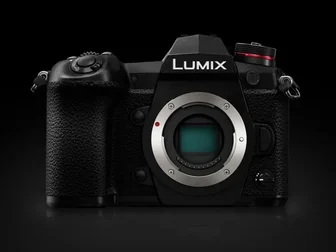
When Panasonic released the **Lumix DC-G9** in late 2017, it was designed with a single uncompromising mission: to create the ultimate flagship still photography camera for the Micro Four Thirds ecosystem. While the video-oriented GH5 captured Hollywood's attention, the G9 was engineered specifically for wildlife, nature, and sports photographers who demanded instantaneous handling, blistering burst speeds, and rugged all-weather durability.
In 2026, selling for **$520 to $620 USD used** (originally $1,699 MSRP), the Lumix G9 represents one of the most intelligent secondhand purchases a photographer can make. For less than the price of an entry-level plastic kit camera, the G9 delivers a professional weather-sealed magnesium alloy chassis, a massive **0.83x magnification OLED viewfinder**, an illuminated **top status LCD display**, dual UHS-II SD card slots, and an **80-megapixel sensor-shift High-Resolution mode**.
Buying Decision | Summary
**Buy if...** | You want professional flagship ergonomics, dual card slots, an enormous viewfinder, and 6.5 stops of stabilization for wildlife, macro, or landscape photography on a strict budget under $600.
**Skip if...** | You need continuous video autofocus tracking (uses contrast DFD, which pulses) or want a tiny pocket camera (the G9 body weighs 658g, similar to a compact DSLR).
**2026 Value Rating** | **9.5 / 10** for enthusiast & beginner stills photographers; **7.0 / 10** for video shooters.
Price & Market Availability (November 2026)
Compared to entry-level modern cameras like the Sony A6100 ($600–$700 used) or Canon EOS R50 ($550–$650 used), the Lumix G9 offers vastly superior weather sealing, twin command dials, joystick control, and physical customization.
Key Technical Specifications
Parameter | Official Specification | Practical Impact
**Sensor** | 20.3MP Digital Live MOS (17.3 x 13.0 mm) | Sensor without optical low-pass filter (OLPF) for crisp fine detail and rich color rendition.
**Electronic Viewfinder** | **3.68M-dot OLED EVF with 0.83x magnification** | One of the largest viewfinders ever fitted to any mirrorless camera; zero optical tunnel vision.
**Status Display** | **Top-Plate Illuminated Monochrome LCD** | Check shutter speed, aperture, ISO, exposure compensation, and battery level at a glance.
**Image Stabilization** | **5-axis Dual I.S. 2 (Up to 6.5 stops)** | Allows sharp handheld exposures down to 1–2 seconds with compatible stabilized Lumix lenses.
**High-Resolution Mode** | **80-Megapixel Sensor-Shift Mode (Tripod)** | Combines 8 sensor-shift micro-steps into a massive 10,368 x 7,776 RAW or JPEG image.
**Burst Speeds** | **20 fps with continuous AF (AF-C)**; 60 fps in AF-S | Electronic shutter bursts capture fast-flying birds; 9 fps mechanical shutter.
**Storage Slots** | **Dual SD Card Slots (Both UHS-II)** | Redundant backup recording or overflow for long nature photography excursions.
**Video Capabilities** | 4K 60p 10-bit 4:2:0 (via firmware 2.0); 4K 30p 10-bit 4:2:2 | Comprehensive video features added via firmware, though 4K 60p has a 10-minute clip limit.
**Weather Sealing** | Freeze-proof to -10°C; splash and dust resistant | Heavy-duty magnesium alloy frame engineered for extreme outdoor wilderness conditions.
**Weight & Dimensions** | 136.9 x 97.3 x 91.6 mm; **658g (body only) / 722g (with battery)** | Deep, contoured handgrip that balances perfectly with large telephoto lenses.
Why the G9 Outperforms Modern Entry-Level Cameras for Beginners
1. True Professional Handling & Muscle Memory
Most beginner cameras reduce buttons and force users into touchscreen menu diving. The Lumix G9 takes the opposite approach: - Dedicated physical dials for Drive Mode (Single, Burst, 6K Photo, Intervalometer). - Front and rear control dials, plus a rear thumbwheel. - 8-way autofocus joystick for rapid focus point placement. - Two front-mounted customizable function levers. - Illuminated top status LCD panel—a feature usually reserved for $3,000+ full-frame bodies.
Learning photography on a camera with dedicated physical controls trains your muscle memory to adjust shutter speed, aperture, and ISO without taking your eye away from the viewfinder.
2. The 0.83x Viewfinder Experience
The electronic viewfinder on the G9 remains legendary. With 3.68 million dots of resolution, a switchable 120 fps refresh rate, and an enormous **0.83x magnification factor** (larger than a Nikon D850 or Sony A7 IV), the view is immersive, bright, and completely free of lag. If the magnification is too large for eyeglasses wearers, a dedicated button instantly drops the scale to 0.77x or 0.70x.
3. Handheld Telephoto Dominance
When paired with the **Panasonic Leica DG 100-400mm f/4.0-6.3 II** (delivering a 200-800mm full-frame field of view), the total kit weighs just 1.7 kg. In contrast, an equivalent 800mm full-frame setup weighs over 4.5 kg. For outdoor birding and wildlife, the G9 provides an unmatched handheld experience.
Limitations to Consider Before Buying
1. **Autofocus Technology:** The G9 uses Panasonic's 225-area Contrast DFD autofocus. In single-shot AF-S for perched birds and landscapes, it locks focus in 0.04 seconds. In continuous video tracking, however, it will periodically pulse or hunt. 2. **Body Dimensions:** The G9 is not a pocket camera. It has the physical footprint and weight of a mid-sized DSLR. If you want ultra-light pocketability, consider the Lumix GX85 instead.
Target Audience & Final Recommendation
- Beginner to intermediate photographers who want professional ergonomics, dual card slots, an exceptional EVF, and weather sealing for **under $600 USD**. - Bird, wildlife, and macro enthusiasts seeking the telephoto reach and depth-of-field advantages of Micro Four Thirds. - Landscape photographers who utilize tripod-mounted 80MP high-res sensor-shift capture. - **Who Should Look Elsewhere:** Videographers who depend on continuous video face-tracking autofocus (look at the Lumix G9 II or Sony A6700 instead).