Quick Verdict & 2026 Value Proposition
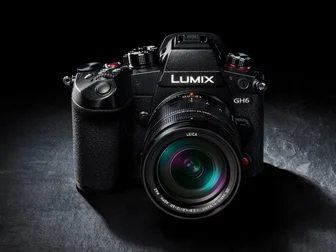
When the **Panasonic Lumix DC-GH6** launched in early 2022, it was hailed as a technological tour de force for independent filmmakers. Featuring a 25.2-megapixel Micro Four Thirds sensor, internal **Apple ProRes 422 HQ recording**, an integrated **active cooling fan** enabling unlimited recording, 5.7K 60p, 4K 120p 10-bit slow motion, and up to 7.5 stops of Dual I.S. 2 stabilization, the GH6 established cinema-grade broadcast capabilities in a compact mirrorless chassis.
In 2026, with the arrival of the phase-detect-equipped GH7, the GH6 has shifted into a phenomenal secondhand value category. Selling for **$1,050 to $1,200 USD used** (less than half the price of a new GH7 at $2,199), the GH6 delivers identical ProRes recording codecs, active fan thermal reliability, and unmatched video assist tools.
Its sole critical limitation is Panasonic's **315-area Contrast DFD autofocus**. For solo videographers relying on continuous face-tracking autofocus for moving vlog subjects, the GH6 will occasionally hunt and pulse. But for filmmakers using manual focus rigs, cinema lenses, corporate interviews, or multicam studio productions, the GH6 remains an absolute cinema powerhouse.
Buying Decision | Summary
**Buy if...** | You want broadcast-tier video codecs (ProRes 422 HQ, 5.7K 60p, 4K 120p), active fan cooling with zero overheating, full-size HDMI, and anamorphic modes for under $1,200 used.
**Skip if...** | You need flawless, set-and-forget phase detection autofocus for moving solo video, or need base ISO 500 in V-Log DR Boost without heavy ND filters (get the GH7).
**2026 Value Rating** | **9.3 / 10** for manual focus cine & studio productions; **6.8 / 10** for solo continuous-AF vloggers.
Price & Market Availability (November 2026)
Key Technical Specifications
Parameter | Official Specification | Practical Impact
**Sensor** | 25.2MP Live MOS (17.3 x 13.0 mm) | High-resolution MFT sensor without optical low-pass filter; delivers crisp 5.7K detail.
**Video Codecs** | **Apple ProRes 422 HQ & ProRes 422 internal** | Edit directly on timeline in Final Cut Pro or DaVinci Resolve without transcoding proxies.
**Frame Rates & Modes** | 5.7K up to 60p; 4K DCI/UHD up to 120p 10-bit; FHD up to 300p | Extensive high-frame-rate options for commercial slow-motion b-roll.
**Thermal Architecture** | **Built-in active cooling fan and exhaust vents** | **Unlimited continuous recording** in all resolutions, frame rates, and ambient temperatures.
**Autofocus System** | **315-area Contrast DFD AF** | Accurate for single-shot stills and static scenes; exhibits focus pulsing/hunting in continuous video.
**Dynamic Range Boost** | Combines dual-gain analog readouts (13+ stops) | Base ISO starts at **ISO 2000 in V-Log** (requires heavy neutral density filters in bright daylight).
**Image Stabilization** | 5-axis Dual I.S. 2 (Up to 7.5 stops) | Incredible handheld stability; enables fluid walking shots without a motorized gimbal.
**Storage Slots** | **1x CFexpress Type B + 1x SD (UHS-II)** | High-speed CFexpress handles extreme bitrates; SD slot serves for standard bitrates or proxies.
**Audio Inputs** | 3.5mm Mic In + Headphone Out; XLR support | Supports 4-channel 24-bit 96kHz audio with the optional DMW-XLR1 adapter.
**Ports** | **Full-Size HDMI (Type A)**, USB-C 3.2 Gen 2 | Robust cinema-grade video output without fragile micro-HDMI adapters.
**Weight & Dimensions** | 138.4 x 100.3 x 99.6 mm; **823g (with battery & card)** | Substantial, rugged weather-sealed body built for production rig cages.
Lumix GH6 vs Lumix GH7: Is the Upgrade Worth $1,000 Extra?
Feature | **Lumix GH6** | **Lumix GH7** | Upgrade Significance
**Autofocus** | Contrast DFD (315 points) | **Phase Hybrid AF (779 points)** | **Massive.** GH7 completely eliminates focus pulsing.
**Audio Pipeline** | 24-bit 96kHz Linear PCM | **32-Bit Float (with DMW-XLR2)** | **Significant.** GH7 never clips audio levels.
**DR Boost Base ISO** | **ISO 2000 in V-Log** | **Base ISO 500 in V-Log** | **Major.** GH7 shoots DR Boost in standard daylight.
**Internal RAW** | ProRes 422 HQ (Raw external) | **Apple ProRes RAW HQ internal** | GH7 records RAW internally without Ninja V recorder.
**Cooling Fan** | Active Fan (Unlimited) | Active Fan (Unlimited) | Identical thermal reliability.
**Body & Ergonomics** | 823g, Tilt-Free LCD | 820g, Tilt-Free LCD | Identical chassis dimensions and cage fit.
**Used Price (2026)** | **$1,050 – $1,200** | **$1,700 – $1,850 ($2,199 new)** | **$600–$1,000 cost savings** on the GH6.
Detailed Engineering Analysis
1. Active Fan Cooling: Absolute Reliability
One of the most frustrating challenges in modern mirrorless video is thermal shutdown. Cameras like the Canon EOS R5 or Sony A7 IV can shut down during extended 4K 60p interviews or under direct summer sun. The GH6 completely eliminates this risk with an integrated, whisper-quiet centrifugal fan positioned behind the rear LCD monitor.
The heat dissipation unit pulls air through sealed side vents without compromising the camera’s magnesium alloy weather seals. You can press record in 5.7K 60p or 4K 120p and leave the camera running for hours until the power source depletes.
2. The DFD Autofocus Limitation
Prospective buyers must be completely clear about the GH6's autofocus. Because the camera uses Panasonic's Contrast-Detect DFD algorithm, it determines focus by evaluating contrast differences across consecutive video frames. In continuous autofocus (AF-C), the camera must periodically modulate the focus motor slightly past the subject to confirm that maximum sharpness was reached.
In slow-paced video, this creates subtle background focus pulsing that is unacceptable for high-end commercial clients. If your production workflow relies on cinema follow-focus units, manual cine lenses, or static interview framing, this limitation is a complete non-issue. If you film yourself walking on the street, the GH7 or full-frame S5 II is the superior choice.
3. Understanding Dynamic Range Boost on the GH6
The GH6 features a dual-gain output circuit that reads two independent gain stages off the sensor simultaneously—one prioritizing shadow details and the other prioritizing highlight retention—combining them into a single 13+ stop dynamic range image.
On the GH6, however, activating DR Boost raises the base ISO to **ISO 2000 in V-Log** (or ISO 800 in standard picture profiles). Outdoors in bright daylight, shooting at ISO 2000 at a 180-degree shutter angle (1/50s) requires a heavy 6-stop or 9-stop neutral density (ND) filter to avoid overexposure.
Target Audience & Final Recommendation
- You are an indie filmmaker, commercial videographer, or film student looking for cinema-grade ProRes 422 HQ, 5.7K 60p, and unlimited active fan cooling for **under $1,200 USD**. - You shoot multi-camera podcast setups, corporate talking-head interviews, theater productions, or live events on tripods where manual focus or locked single-point AF is standard. - You already own a collection of high-quality Micro Four Thirds lenses and want professional video monitoring tools (waveform, vectorscope, false color, anamorphic de-squeeze) without buying external monitors.
- You are a solo creator who depends on automated face and eye tracking autofocus. - You need fail-safe 32-bit float audio capture directly into video files. - You shoot high dynamic range outdoors without wanting to stack heavy ND filters at ISO 2000.