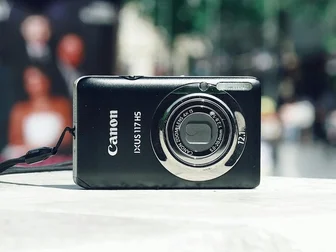
Executive Overview: The Unstoppable Cultural Surge of 1-Inch Compacts
In the early 2020s, conventional tech industry wisdom predicted that compact point-and-shoot cameras were destined for extinction. Flagship smartphones boasted multi-lens arrays, computational night modes, and instant cloud connectivity that seemed to render dedicated compact cameras obsolete.
Yet over recent years, an unexpected phenomenon unfolded across global creator communities: the **Canon PowerShot G-Series renaissance**. From TikTok vloggers to international travel creators, demand for cameras like the **Canon PowerShot G7 X Mark III** and **G5 X Mark II** skyrocketed. Far from disappearing, clean used copies and new production batches routinely command prices matching or exceeding their original launch MSRPs.
This creator-driven resurgence is rooted in fundamental optical and thermal physics. While smartphones have made remarkable computational strides, they remain physically limited by microscopic lens apertures and aggressive digital sharpening filters. Canon’s PowerShot G-series delivers what computational algorithms still cannot replicate: a large 1.0-inch stacked CMOS sensor, authentic optical zoom, a fast f/1.8–2.8 glass aperture, integrated mechanical ND filtration, and dedicated audio/video hardware in a pocketable form factor.
Sensor Physics: The 1.0-Inch Stacked Architecture Explained
To understand why 1-inch compact cameras outperform premium smartphones in everyday vlogging and travel, one must analyze the physical surface area of the image sensor.
Sensor Surface Area Comparison Matrix
Sensor Format | Physical Dimensions (W × H) | Total Surface Area | Relative Area vs 1/2.3" | Key Photographic Advantage
**Standard Smartphone (1/2.3")** | 6.17 × 4.55 mm | 28.07 mm² | 1.0× Baseline | Ultra-compact, but high noise and harsh computational clipping
**Premium Main Phone Sensor (1/1.3")** | 9.60 × 7.20 mm | 69.12 mm² | ~2.46× | Improved night modes, but requires extreme software processing
**Canon PowerShot 1.0-Inch CMOS** | **13.20 × 8.80 mm** | **116.16 mm²** | **~4.14×** | **Authentic optical depth of field, wide dynamic range, organic roll-off**
**APS-C Mirrorless (Canon RF-S)** | 22.20 × 14.80 mm | 328.56 mm² | ~11.7× | Exceptional resolution, but requires bulky interchangeable lenses
Measuring $13.2 \times 8.8\text{ mm}$, a 1.0-inch sensor offers over **four times the physical surface area** of traditional compact sensors. When paired with large photodiodes (pixel pitch of approximately 2.4 microns on a 20.1MP array), the sensor captures more light per microsecond, yielding wider native dynamic range, smoother skin tone gradations, and clean low-light performance without artificial watercolor smoothing.
Furthermore, the **stacked CMOS architecture** incorporates high-speed DRAM circuitry bonded directly behind the photodiode pixel layer. This facilitates rapid parallel readout, enabling full-resolution 20.1MP continuous bursts at up to **30 frames per second (in RAW Burst Mode)** and uncropped 4K video recording.
Optical Design: The 24-100mm f/1.8-2.8 Zoom Formulation
The crown jewel of the Canon G7 X series is its custom-engineered optical zoom lens. Packaging a 4.2× optical zoom range into a retractable barrel measuring under 40mm when powered down required sophisticated optical engineering.
Optical Formula Breakdown (G7 X Mark III)
- **Construction:** 11 elements in 9 groups, featuring **4 precision dual-sided aspherical elements** and 1 High-Refraction (HR) glass element to suppress chromatic aberration and distortion. - **Physical Aperture Entrance Pupil:** At 24mm equivalent, the maximum aperture opens to **f/1.8**; at 100mm equivalent telephoto, it maintains a bright **f/2.8**. This large physical entrance pupil diameter (up to 13.1mm) delivers natural optical background blur (bokeh) that computational portrait modes cannot match around loose hair, transparent glasses, and complex backgrounds. - **Intelligent Optical Image Stabilization (IS):** A 4.0-stop shift-type optical stabilizer detects camera shake via dual gyro sensors, providing stable handheld footage while walking.
The Critical 3-Stop Internal Optical ND Filter
For outdoor videographers, the most load-bearing feature of the G7 X and G5 X is the **built-in 3-stop Neutral Density (ND8) filter**. In bright midday sunlight, maintaining the cinematic 180° shutter rule (1/60s shutter speed at 30 fps) at f/1.8 requires cutting incoming light by three full stops. Without an ND filter, a camera must stop down to f/11 (inducing diffraction softness) or push shutter speed to 1/2000s (creating harsh, jittery motion). The internal optical glass ND filter swings into the light path with a single touch, preserving smooth, cinematic motion blur.
Product Lineup Comparison: G7 X III vs G5 X II vs PowerShot V10
Technical Parameter | Canon PowerShot G7 X Mark III | Canon PowerShot G5 X Mark II | Canon PowerShot V10
**Primary Target Audience** | Vloggers, YouTube creators, lifestyle | Serious enthusiast photographers, travel | Solo daily mobile vloggers, TikTok
**Sensor Resolution & Type** | 20.1MP 1.0" Stacked CMOS | 20.1MP 1.0" Stacked CMOS | 13.1MP (Video) / 15.2MP (Stills) 1.0"
**Focal Range (35mm Equiv.)** | **24–100mm (4.2× Optical Zoom)** | **24–120mm (5.0× Optical Zoom)** | **19mm Ultra-Wide Fixed Prime**
**Maximum Aperture** | f/1.8 (Wide) – f/2.8 (Tele) | f/1.8 (Wide) – f/2.8 (Tele) | f/2.8 Fixed Aperture
**Integrated Viewfinder (EVF)** | None (Framing via LCD screen) | **Pop-up 2.36M-dot OLED EVF** | None
**LCD Articulation** | 3.0" Touchscreen (180° Flip-Up) | 3.0" Touchscreen (180° Flip-Up) | 2.0" Tilt Touchscreen (180° Flip-Up)
**External Microphone Input** | **3.5mm Stereo Microphone Jack** | None (Internal stereo mics only) | Built-in omnidirectional stereo mics
**Clean HDMI Output** | **Yes (Micro-HDMI Clean Out)** | Yes (Micro-HDMI) | Micro-HDMI
**Direct Live Streaming Support** | **Yes (YouTube Live RTMP via Wi-Fi)** | No | Yes (via Canon Camera Connect App)
**Operating Weight (w/ Battery & SD)** | **304 g (10.72 oz)** | **340 g (11.99 oz)** | **211 g (7.44 oz)**
**Verified 2026 Market Value** | **$749 MSRP ($580–$680 used)** | **$899 MSRP ($720–$820 used)** | **$429 MSRP ($320–$380 used)**
Vlogging Workflows: Solving Heat, Audio & Autofocus
Emerging creators often wonder how the G7 X Mark III performs in rigorous production environments.
1. **Thermal Endurance in 4K Video:** Following Canon’s official firmware updates (v1.3+), thermal management was substantially optimized. The G7 X Mark III records uncropped 4K/30p for up to 30 minutes per clip without thermal shutdown under standard indoor temperatures, while 1080/60p recording can operate indefinitely until the battery depletes. 2. **Face and Eye Detection Tracking:** Leveraging Canon's DIGIC 8 processor, the camera continuously tracks human faces and eyes across the entire frame. For product review vloggers, holding an item in front of the lens triggers a responsive focus transition before snapping back to the presenter's eyes when lowered. 3. **Audio Pre-Amp Quality:** The dedicated 3.5mm microphone input allows creators to mount compact wireless receivers (such as DJI Mic 2 or Rode Wireless PRO) to capture studio-grade dialogue without needing post-production synchronization.
Choosing the Right Compact Tool
- **Select the Canon PowerShot G7 X Mark III if:** Your focus is video content creation, YouTube vlogging, daily social video, and clean live streaming where an external 3.5mm microphone input and 180° selfie screen are mandatory. - **Select the Canon PowerShot G5 X Mark II if:** You prioritize traditional still photography and travel documentation, where having a pop-up high-resolution OLED electronic viewfinder for framing under blinding sun and an extended 120mm telephoto reach outweighs the need for a microphone jack. - **Select the Canon PowerShot V10 if:** You require the ultimate pocket-friendly, self-standing vertical video tool that slips into a pocket and deploys in seconds without external mini-tripods.
Conclusion: The Enduring Mastery of Specialized Imaging Hardware
The enduring success of Canon’s PowerShot G-series demonstrates that physical optical engineering cannot be entirely substituted by computational code. For creators seeking tactile control, genuine optical depth, and effortless vlogging versatility, Canon’s 1-inch compacts remain peerless instruments in the visual storytelling toolkit.