Sony just made a huge move in the fight against deepfakes and fake video content. Their Camera Authenticity Solution now supports video files, not just still photos. If you shoot news, documentary, or any kind of real-world video, this is something you need to know about.
Camera Verify (beta) launched last June as a way for newsrooms to prove their photos were actually captured by a real camera. Now that same technology works for video. This matters because video manipulation has gotten insane lately. We're talking about AI-generated footage that looks completely real. Sony is trying to stop that at the source — the camera itself.
Sony's Camera Verify website now supports video file authentication
What's Actually Happening Here
Sony announced that Camera Verify (beta) now handles video files. The expansion means news organizations can now validate both stills and video through a dedicated verification URL. This uses the C2PA standard — that's the Coalition for Content Provenance and Authenticity, an industry group trying to create universal standards for content verification.
Here's the thing: this isn't some fancy AI guesswork. Sony's system embeds digital signatures directly into the video file at the moment of capture. The keys used for these signatures are stored in hardware — specifically in the camera's secure chipset. That's a big deal because it means the signature can't be faked or added later. Either the camera created it in real-time, or it's not verified.
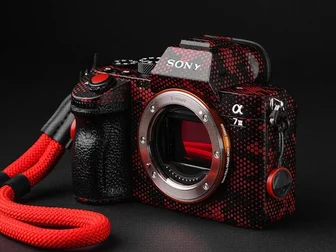
The supported camera list includes some heavy hitters: Sony a1, a1 II, a9 III, a7R V, a7S III, a7 IV, FX3, FX30, and PXW-Z300. Sony says the relatively new a7 V will get support by May 2026. That's pretty fast turnaround for firmware compatibility.
Cameras supporting video authenticity: a1, a1 II, a9 III, a7R V, a7S III, a7 IV, FX3, FX30
How The Technology Actually Works
Let me break this down in plain English because there's a lot of confusing terminology floating around.
1. Digital Signatures at Capture
When you press record, the camera creates a unique digital signature using keys stored in a secure hardware chip. This signature is embedded into the video file as metadata in real-time. Think of it like a digital fingerprint that proves "this video definitely came from this specific camera at this specific moment."
2. Depth Map Magic
Here's where it gets interesting. Sony's system also captures 3D depth information along with the video. In the sample verification page Sony showed, you can watch a clip and see the sensor-based depth map respond in real-time while the video plays. This proves the subject actually exists in the real world — not on a 2D screen. It's basically mathematical proof that you're filming a real 3D scene, not a screen recording of generated content.
3. Timestamp Verification
The system also attaches a highly secure server-acquired timestamp to each file. This isn't just reading your camera's clock — it's getting time from a trusted server. The timestamp is tamper-proof and can't be changed after the fact.
4. C2PA Compliance
The whole system aligns with C2PA standards. That means if other platforms and publishers adopt C2PA (and many are working on it), your verified content carries proof of authenticity everywhere it goes.
3D depth information proves subjects exist in the real world, not AI-generated
What This Means For Different Users
For News Organizations
If you're a journalist or work in news media, this is huge. The ability to prove your footage is real matters more than ever. Remember when fake videos of politicians saying things they never said went viral? This technology gives newsrooms a way to say "look, here's cryptographic proof this came from our camera."
Sony explicitly states they're targeting news organizations with this. They're helping verified outlets deliver information with proven provenance. That's a direct response to the erosion of trust in media.
For Documentary Filmmakers
Documentary work often involves sensitive real-world situations where authenticity matters. Having a verified, tamper-proof record of when and how footage was captured adds another layer of credibility to your work. It's not just about the final edit — it's about proving the integrity of your source material.
For Content Creators
If you're creating content where authenticity matters — investigative pieces, travel documentaries, event coverage — this gives you a technical edge. Your audience knows your footage is legit. That trust factor could become more valuable as deepfake technology gets even better.
News organizations are the primary target for Sony's authenticity solution
The Limitations You Should Know About
I'm going to be honest — this isn't a perfect solution. Here's what's not supported right now:
File Format Restrictions
It only works with MP4 format video at 222 Mbps or lower bitrate. 8K footage? Not supported. Slow motion or quick motion footage? Also not supported. That's a significant limitation if you shoot high-end production work.
Hardware Requirements
The PXW-Z300 camcorder, while supported, doesn't have the depth map technology. So you get less verification capability with that particular model.
Not Universal
This only works with Sony cameras. If Nikon, Canon, or Fujifilm don't adopt similar systems, the industry remains fragmented. The C2PA standard helps, but adoption across all camera makers is crucial for this to become a real universal solution.
It's Still Beta
Sony explicitly states this is a beta version available for a limited time. The functionality might change when the official version releases. There's no guarantee when that official version will come.
License Required
Camera Verify isn't free. You'll need to purchase a license. Sony hasn't publicly disclosed pricing, so that's something to investigate if you're interested.
Deepfake technology makes video verification increasingly critical
Why This Matters For The Photography Industry
Here's the bigger picture. We're at a turning point in media history. The tools to create convincing fake video have become accessible to anyone. Simultaneously, the public's ability to trust what they see has eroded significantly.
Sony's approach is significant because it tackles the problem at the source — the moment of capture. This is crucial. Trying to verify content after it's been edited or distributed is much harder than proving it was authentic when recorded.
The photography and video industry has a choice here. Camera makers can either ignore the authenticity problem and let the wild west continue, or they can invest in solutions that preserve the value of real-world captured content. Sony is clearly choosing the latter.
Other companies are also working on this. Canon has their own authenticity initiatives. Nikon is involved in C2PA. But Sony seems to be leading the charge right now, especially for video.
Should You Care?
If you're a hobbyist shooting family videos or travel content, this probably doesn't affect you directly yet. The licensing cost and technical setup mean it's primarily aimed at professionals and organizations.
But here's why it matters even if you're not a pro: the technology you see in pro cameras today often trickles down to consumer models in a few years. This could eventually become standard in mid-range cameras too. The more the industry adopts authenticity solutions, the more we all benefit from a media ecosystem where "real" actually means something.
Also — if you're someone who cares about truth and authenticity in media, this represents a real technical solution to a scary problem. We're not just talking about detecting fakes after the fact. We're talking about preventing them at the source.
The Road Ahead
Sony has committed to adding more camera support in the future. The a7 V getting compatibility by May shows they're actively working on expansion.
The bigger question is industry adoption. For this to really work, we need:
1. More Camera Makers On Board
Canon, Nikon, Fujifilm, and Panasonic all need similar systems. Fragmentation hurts everyone.
2. Platform Adoption
Social media platforms and news sites need to actually check and display authenticity information. C2PA compliance on the camera side is only half the battle.
3. Consumer Awareness
Regular people need to understand why verified content matters. That's an education challenge on top of the technical one.
In-camera authenticity could become standard in future cameras
My Take
I've been shooting video for years, and honestly? This excites me more than most camera gear announcements lately. We're not talking about anothermegapixel bump or incremental ISO improvement. This is about preserving the fundamental value of captured imagery in an age when that value is under siege.
The limitations are real — the beta status, the format restrictions, the licensing cost. But the direction is correct. Sony is solving a problem that matters, not just chasing spec sheets.
If you're in the market for a professional video camera and authenticity matters for your work, the Sony ecosystem just became more attractive. The FX3 or FX30 make even more sense now if you're doing documentary or news work. That built-in verification could become as standard as RAW recording.
The question isn't whether in-camera authentication becomes standard — it's how fast. And Sony just put themselves ahead of that curve.
Let's Talk
What do you think about camera-based authenticity solutions? Is this the future of video, or is it too little too late against sophisticated AI fakes? Drop your thoughts below — I'm genuinely curious what the community thinks.
If you found this useful, share it with other creators who should know about this. And if you want more breakdowns of photography tech that actually matters, stay tuned.
Technical Deep Dive: The Security Architecture
Let me get a bit more technical here because understanding how this actually works matters if you're evaluating whether to adopt it.
Hardware Security Module
The digital signature keys are stored in what Sony calls a hardware security module within the camera. This isn't software-based encryption that can potentially be bypassed. The keys are generated and stored in a chip that's physically isolated from the main camera processor. Even if someone hacks the camera's software, they can't access these keys to create fake signatures.
Chain of Custody
Each frame of video gets a unique signature. But it's not just about individual frames — the entire video file has a continuous cryptographic chain. If someone tries to edit even one frame, that chain breaks and verification fails. That's a powerful concept. It means you can't just add verified footage into an otherwise fake video and have it pass.
Real-Time Processing
The signature happens as you record, not after. There's no delay, no additional processing step. The camera does this natively. That's crucial because it means there's no workflow change for shooters. You just record as normal, and the verification happens automatically.
Metadata Integration
The signatures integrate with standard metadata. You get camera model, serial number, lens used, timestamp, and all the standard metadata — plus the cryptographic proof. It's additive, not replacing existing workflows.
Comparing Approaches: Sony vs The Competition
Sony isn't alone in this space, but they're ahead in a few key ways.
Canon
Canon has been working on their own authenticity technology, particularly for photo verification. They showed prototypes at recent trade shows. But as of March 2026, their video support isn't as developed as Sony's. They're focusing more on photojournalism use cases first.
Nikon
Nikon is participating in C2PA initiatives but hasn't announced a comprehensive video solution yet. They're taking a wait-and-see approach, which is typical of their conservative market strategy.
Fujifilm
Fujifilm hasn't made major announcements about authenticity solutions. They're focusing on camera hardware improvements rather than authentication features.
Panasonic
Panasonic, despite being a major video player with their Lumix line, hasn't announced specific authenticity features for video. Given their professional video heritage, this could change.
What's interesting is Sony's first-mover advantage. If their system becomes the de facto standard in newsrooms, other camera makers will face pressure to match compatibility. That's a significant strategic positioning beyond just the technology.
The C2PA Standard Explained
You've probably seen C2PA mentioned a few times. Let me break it down simply.
C2PA stands for Coalition for Content Provenance and Authenticity. It's an industry organization working on standards for verifying where digital content came from. Think of it like nutrition labels for digital files — except instead of calories and ingredients, it shows you the history of how content was created and edited.
The coalition includes major players: Adobe, Arm, Intel, Microsoft, Google, and now Sony. They want to create universal standards that work across different cameras, software, and platforms.
Why does this matter? Because fragmented solutions don't work. If Sony has their own system that only Sony cameras understand, and Canon has something different, and Nikon has another thing — it becomes a mess. Everyone needs to speak the same language for this to work at scale.
Sony's video support is C2PA-compliant. That means verified Sony footage can be recognized by any platform or software that also supports C2PA. That's the key to making this useful beyond just Sony's own verification website.
Real-World Testing: What The Sample Shows
Sony provided a sample verification page demonstrating the technology. It's worth understanding what they showed because it reveals both capabilities and limitations.
The sample page shows a video clip verified as being captured with a Sony FX3 and a Sony FE 70-200mm f/2.8 GM OSS II lens. You can see the camera model, serial number, lens model, and capture details.
The depth map visualization is the standout feature. As the video plays, you can see a visualization showing the 3D depth information captured by the sensor. This proves the subject exists in real space — not on a screen. It's a clever solution to one of the hardest problems in verification: proving you're not filming a screen.
However, the depth map only works with certain cameras. The PXW-Z300 doesn't support it, as mentioned. And for still photos versus video, the implementation differs slightly.
Cost Analysis: Is It Worth It?
Sony hasn't publicly disclosed Camera Verify pricing. That's a bit of a red flag for transparency. Here's what we know:
License Required
This isn't a free feature. Organizations need to purchase a license to use Camera Verify. The pricing model is unclear — is it per-camera, per-organization, or subscription-based?
Beta Limitations
The beta is free for now but is time-limited. When the official version releases, there will likely be charges. Existing beta users won't be automatically charged, but future users will pay.
Hardware Investment
To use this properly, you need one of the supported cameras. If you're already shooting Sony, that's great. If you're Canon or Nikon, this creates a significant reason to consider switching or adding Sony bodies.
Workflow Integration
There's a learning curve and workflow adjustment. Your newsroom or production team needs to understand how to use the verification tools and integrate them into existing processes.
The honest assessment? This makes sense right now for organizations that genuinely need verified footage — major news networks, investigative journalism outlets, documentary production companies. For independent creators, it's probably overkill unless you have specific clients who require authenticity verification.
The Bigger Picture: Truth In The AI Age
Let me zoom out for a moment. We've reached a point where generating convincing fake video is something anyone can do with free tools. The implications for society are massive. Trust in visual media is at an all-time low.
In this environment, camera manufacturers have an unexpected role: they're becoming guardians of truth. What Sony is doing with Camera Verify is essentially building cryptographic proof of authenticity at the capture point. It's a technical solution to a social problem.
Whether this ultimately succeeds depends on factors beyond the technology. Platform adoption matters. Regulatory frameworks might eventually require authenticity labeling. Consumer awareness will shape demand.
But for now, we have a working solution from a major manufacturer. It's not perfect. It's not complete. But it's real, and it's shipping.
That matters. In a world drowning in misinformation, any step toward verifiable truth is a step worth taking.
Looking Forward: What's Coming Next
Sony has indicated more camera support is coming. The a7 V getting verification by May shows they're actively expanding the ecosystem.
What I'd like to see:
Lower-Cost Options
Bringing this to mid-range cameras would expand the user base significantly. Not everyone needs an a1 or FX3, but many serious creators would benefit from authenticity features.
Better Integration
Native integration with major editing software would help. Right now, you verify on Sony's website. Seamless integration with Premiere, DaVinci Resolve, or Final Cut would streamline workflows.
Platform Partnerships
YouTube, social media platforms, and news sites need to actually use this information. Right now, Sony provides verification, but there's no requirement for platforms to display or respect that information.
Pricing Transparency
Sony needs to be clearer about costs. Organizations can't plan budget without knowing the investment required.
Conclusion
Sony's expansion of Camera Verify to video is a significant development in the fight for media authenticity. The technology is solid, the approach is sound, and the timing is crucial. We're at a point where distinguishing real from fake footage is increasingly difficult, and camera-level verification offers a compelling solution.
Limitations exist — the beta status, format restrictions, limited camera support, and unclear pricing. But the direction is clear, and Sony is ahead of competitors in this space.
For news organizations and documentary creators, this is worth investigating. For the rest of us, it's a glimpse into where camera technology might be heading. In-camera authenticity could become as standard as RAW recording or IBIS.
The question is no longer whether this technology matters — it's how quickly it becomes standard across the industry.