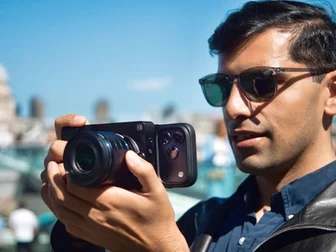
Caira mirrorless camera is the first to bake AI video editing right into the body
Camera Intelligence just opened the private beta for Caira Studio — and the headline is that the company's MFT Caira mirrorless now does generative AI video editing in-camera. Built on Google's Gemini Omni 1.1 Flash and Runway's Aleph 2.0, it edits real clips (not generates from scratch) and stamps every output with a Google SynthID watermark. Fifth batch of cameras up for preorder at $999.
Under the hood, Caira Studio leverages an in-camera NPU to process low-latency semantic metadata before sending high-bandwidth tasks through the Gemini Omni pipeline. By embedding cryptographic C2PA provenance and SynthID watermarking at the sensor level, the camera addresses rising industry concerns regarding AI attribution and content authenticity before the footage ever touches an SD card.
While traditional Micro Four Thirds video workhorses like the Lumix GH7 focus on uncompressed RAW workflows and 32-bit float audio fidelity, Caira is betting on turnaround speed for short-form social video producers. As discussions around the future viability of the Micro Four Thirds sensor ecosystem continue, seeing innovative computational architectures choose the MFT mount demonstrates that the compact sensor format still provides fertile ground for experimental camera concepts.
I usually bounce hard off "AI in camera" marketing, but Caira is clear this is an editing tool, not a "create footage from nothing" tool. If they nail the use case for solo creators who can't afford Premiere + After Effects + a colorist, this is the first time I've wanted to actually try it. Full breakdown on PetaPixel.