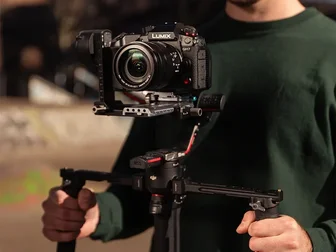
Quick Verdict & System Health in 2026
Is Micro Four Thirds dying? In 2026, the answer is a resounding **no**. While early doom-and-gloom articles predicted Panasonic would abandon its 4/3-inch sensor system following the expansion of its full-frame L-mount lineup, Panasonic’s release and continued firmware backing of the **Lumix G9 II** (PDAF, 60fps bursts) and **Lumix GH7** (internal ProRes RAW, 32-bit float audio) have solidified a clear, differentiated dual-system roadmap.
Rather than competing directly against 35mm full-frame sensors in ultra-shallow depth of field or extreme ISO 12,800 low light, Micro Four Thirds holds an untouchable optical advantage where physical size, weight, telephoto reach, and deep depth of field govern image-making: **wildlife, aviation, macro photography, adventure travel, and run-and-gun documentary video**.
System Evaluation | Key Takeaway
**Current Ecosystem Status** | **Mature & Active.** Over 120 native lenses across Panasonic, OM System, Sigma, and Voigtländer. Firmware updates continue across flagship bodies.
**Best-in-Class Advantages** | 2.0x focal crop factor for telephoto reach; unbeatable sensor stabilization (up to 8.0 stops); compact, budget-friendly high-grade glass; deep depth of field for macro.
**Inherent Tradeoffs** | Approximately 1.5 to 2 stops less low-light dynamic range compared to modern 35mm BSI full-frame sensors; difficult to achieve ultra-shallow background blur on standard focal lengths.
**2026 Recommendation** | Micro Four Thirds remains the smartest price-to-weight photographic investment for outdoor adventurers, telephoto shooters, and mobile filmmakers.
The Physics of Micro Four Thirds: Why the 2.0x Crop Factor Matters
A Micro Four Thirds sensor measures **17.3 x 13.0 mm**, with an aspect ratio of 4:3 (closer to medium format than the 3:2 ratio of 35mm film). Compared to a standard 36 x 24 mm full-frame sensor, MFT yields an exact **2.0x crop factor**.
``` +-----------------------------------------------------------+
Full Frame (36 x 24 mm) - 864 mm²
| APS-C (23.6 x 15.6 mm) - 368 mm² |
| |
| | Micro Four Thirds | |
| | (17.3 x 13.0 mm) - 225 mm² | |
+-----------------------------------------------------------+ ```
1. The Handheld Super-Telephoto Advantage
In full-frame photography, achieving an 800mm field of view requires a monstrous lens such as an 800mm f/5.6 or 600mm f/4 with a teleconverter, weighing between 3,000g and 4,500g and costing $6,000 to $13,000.
In Micro Four Thirds, the **Panasonic Leica DG 100-400mm f/4.0-6.3 II** delivers an identical **200-800mm equivalent field of view** while weighing just **985 grams** and costing around $1,200 used in 2026. A wildlife photographer can trek 15 miles into alpine wilderness with 800mm of reach hanging comfortably from a neck strap—handheld, without a tripod.
2. Sensor-Shift Stabilization Superiority
Because a Micro Four Thirds sensor has less physical mass than a full-frame sensor, the voice-coil electromagnets driving in-body image stabilization (IBIS) can accelerate and adjust the sensor with significantly higher speed and precision. Systems like Panasonic Dual I.S. 2 achieve up to **7.5 to 8.0 stops of stabilization**, enabling 2-second to 4-second handheld night exposures and gimbal-smooth handheld walking video.
3. Macro Photography & Depth of Field
At any given physical aperture (e.g. f/4), an MFT camera produces two stops more depth of field than a full-frame camera framing the same subject. In portraiture, photographers often desire thin focus; in **macro, product, and architectural photography**, shallow depth of field is a severe handicap requiring tedious focus-stacking. MFT provides the depth of field necessary to keep an entire insect or watch face sharp in a single handheld exposure.
Panasonic’s Dual Strategy: L-Mount vs Micro Four Thirds
Feature / Criteria | **Panasonic L-Mount (Full Frame)** | **Panasonic Lumix G (Micro Four Thirds)**
**Flagship Bodies** | Lumix S5 II, S5 IIX, Lumix S1H, Lumix S9 | Lumix G9 II, Lumix GH7, Lumix GH6, Lumix GX9
**Sensor Dimensions** | 35.6 x 23.8 mm (Full Frame) | 17.3 x 13.0 mm (Micro Four Thirds)
**Optimal Use Cases** | Low-light events, commercial studio, cinematic shallow DOF, client work | Wildlife, birding, sports, macro, travel, run-and-gun documentary, gimbal video
**Average Body Weight** | 740g – 1,164g | 400g – 820g
**Telephoto Lens Weight** | 150-600mm (~2,100g) | 100-400mm (~985g)
**Autofocus Technology** | Phase Hybrid AF (S5 II, S9) | Phase Hybrid AF (G9 II, GH7)
**Used Lens Entry Point** | $350 – $600 per prime | $120 – $280 per prime
Rather than cannibalizing each other, Panasonic positions full-frame bodies as high-resolution studio and cinema instruments, while maintaining Lumix G as the ultimate field, adventure, and broadcast platform.
The Used Market Advantage in 2026
Because Micro Four Thirds is an open standard established in 2008 by Panasonic and Olympus, it boasts the deepest, most affordable used lens catalog in the mirrorless industry: - **Ultra-Budget Primes:** The iconic **Lumix 20mm f/1.7 II pancake** ($140–$180 used) and **Olympus 45mm f/1.8** ($150–$190 used) deliver razor-sharp results in tiny footprints. - **Pro Weather-Sealed Zooms:** The **Panasonic Leica DG 12-60mm f/2.8-4.0** ($380–$440 used) provides an all-in-one 24-120mm equivalent weather-sealed metal package that outperforms full-frame kit zooms costing three times as much. - **High-Speed Telephoto:** The **Olympus M.Zuiko 40-150mm f/2.8 PRO** ($750–$880 used) yields an 80-300mm f/2.8 constant equivalent that fits easily in a standard messenger bag.
Verdict: Should You Invest in Micro Four Thirds in 2026?
Micro Four Thirds is not a compromised step on the way to full frame; it is a specialized optical tool with unique physical properties that 35mm sensors cannot replicate without massive weight penalties.
If your photography demands **maximum reach per gram, lightweight travel mobility, incredible handheld stabilization, and access to dozens of affordable high-quality lenses**, investing in Panasonic's Micro Four Thirds ecosystem in 2026 remains one of the smartest, most practical decisions a photographer or video creator can make.