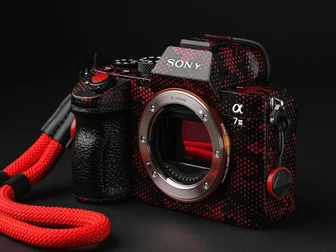
I’ve been shooting with Panasonic cameras for years — currently rocking a GH7 as my daily driver — and I’ve watched the mirrorless market evolve dramatically. But every now and then, a camera drops that makes even a committed M43 user pause. The Sony A1 II is that camera. Priced at a eye-watering $7,000, it’s Sony’s flagship beast designed to handle everything from sports to wildlife to high-end video without breaking a sweat. But here’s the real question: is it actually worth the upgrade from the original A1, or even from the more affordable A9 III? I’ve been digging through the latest long-term reviews, and I’m going to give you the honest breakdown on what $7,000 really gets you in 2026.
What Happened and What’s Actually Confirmed
Sony announced the A1 II back in late 2025, and it landed in stores just in time for the holiday season. This isn’t just a incremental refresh — it’s Sony’s attempt to consolidate everything they’ve learned from the A1 and A9 III into one unified flagship body. The original A1 was groundbreaking in 2021, but it was showing its age in some key areas, particularly autofocus and handling.
What makes this launch interesting is the timing. We’re in a weird spot in the camera industry where technology has largely plateaued. Most cameras today are already excellent. So when Sony drops a $7,000 body, they better have some compelling reasons why you should care. The A1 II aims to be that one camera that rules them all — a true hybrid beast that can shoot 50-megapixel stills at 30 frames per second while also churning out 8K video.
But let’s be real: most photographers don’t need this much camera. The real question is whether the improvements over the original A1 justify the premium, or whether you’re better off saving thousands with an A9 III or even an A7R V. That’s exactly what I’m going to break down for you.
What’s Genuinely New (Not Marketing Fluff)
Let’s cut through the jargon and talk about what actually makes this camera different from its predecessor. The changes might sound small on paper, but they fix real daily frustrations that pro photographers deal with.
1. The New Tilt-and-Flip LCD
The most visible upgrade is the new 3.2-inch LCD screen. Sony finally ditched the older tilt-only design in favor of the tilt-and-flip mechanism first seen on the A7R V. This might seem like a small change, but for video shooters and vloggers, it’s massive. You can finally see yourself while recording — no more guessing if your framing is off. For stills photographers, the flip-out design makes it easier to shoot from awkward angles, whether you’re on a ladder or down low.
2. Better Ergonomics and Grip
The body is a touch larger with a grip that actually feels substantial when you hang heavier glass off the front. The original A1 had a grip that was comfortable but not quite “pro” — this new one finally matches what you’d expect from a $7,000 camera. If you’ve ever shot with a 600mm f/4 or even a 70-200mm f/2.8 for extended periods, you’ll appreciate the extra purchase.
3. Separate Control Setups for Stills and Video
This is a workflow feature that sounds minor but changes everything. You can now save custom button setups separately for stills, video, and slow/quick modes. No more fumbling with your settings when you switch from shooting photos to video mid-session. Your video-specific button assignments won’t interfere with your stills setup. It’s the kind of quality-of-life improvement that makes the camera feel like it was designed by people who actually use these things professionally.
4. Improved Viewfinder
The 9.44-million-dot OLED viewfinder now runs at 120 fps by default, maintaining that high resolution instead of dropping detail like the older model did. When you’re tracking fast action, this smoothness matters. Your eye can’t detect individual frames at 120 fps, but your brain registers the fluidity, making it easier to follow subjects through the viewfinder.
Specs → Real-World Impact
Okay, let’s talk about what those specifications actually mean when you’re out shooting in the real world. I need to walk you through the key areas where these specs matter most for different types of photography.
50.1MP Full-Frame Stacked CMOS Sensor
The A1 II keeps the same 50.1-megapixel sensor as its predecessor, which is still plenty of resolution for most needs. You can crop aggressively and still have room to spare. For commercial work, portraits, and landscape photography, this sensor delivers absolutely stunning detail. But here’s the thing — unless you need that resolution specifically, the 24-megapixel A9 III might actually be the better choice for sports and wildlife because of its faster readout speeds.
30 fps Burst with AF/AE Tracking
Let’s be clear about the burst mode because the rules around it can bite you. Yes, you get 30 fps, but achieving that often means shooting lossy compressed raw files. If you want fully lossless raws, you’re looking at around 20 fps — still blazing fast, but not the headline number. Also, top burst rates can depend heavily on using Sony-branded lenses rather than third-party options. If you’re shooting with Tamron, Sigma, or other third-party glass, your mileage may vary significantly.
Dedicated AI Chip for Autofocus
This is where the A1 II really shines. The dedicated AI processing unit delivers some of the best autofocus I’ve seen in any camera. It recognizes humans, animals, birds, insects, vehicles, airplanes, and trains — and it does so with remarkable accuracy. The system sticks to your chosen subject even when faces disappear or foreground clutter tries to steal focus. In real-world testing, this system just works. You point, you shoot, it focuses. The Tamron 25-200mm f/2.8-5.6 — not exactly a sports lens — still delivered impressive results with this autofocus system.
8K 30p and 4K 120p Video
For video shooters, you get 8K up to 30 fps and 4K up to 120 fps. But here’s what you don’t get: open gate recording or internal RAW video. Those are features Sony reserved for the cinema line. What you do get are meaningful upgrades like custom LUT monitoring for color grading, AI autoframing that can mimic an operator by cropping and tracking your face, and stronger stabilization with an active mode for handheld movement.
8.5 Stops of In-Body Image StabilizationSony’s best-ever IBIS rating — 8.5 stops of compensation — actually delivers in practice. Our reviewer found it usable for sharp handheld shots at surprisingly slow shutter speeds. For video, the active mode provides smooth footage without the robotic jerkiness that some stabilization systems produce. If you’re a solo shooter, this stabilization alone can save you from ruined takes you only notice after you pack up.
Battery Life: The Weak Point
Power stays on the familiar NP-FZ100 battery, but the shot ratings actually dip compared to the older A1 body. If you’re leaning heavily on high-resolution video modes, you’ll need to plan for extra batteries. This isn’t a deal-breaker, but it’s something to factor into your workflow, especially for all-day event coverage.
Upgrade Math: Who Should Buy, Who Should Hold
Let’s get practical. Not everyone needs this camera. Here’s who should actually open their wallet and who should save their money.
Buy If:
You’re on the original A1 (2021): The autofocus improvements alone justify the upgrade. The handling improvements are the cherry on top.You’re a professional hybrid shooter: If you regularly shoot both high-res stills and video for clients, this camera consolidates your workflow.You need the best autofocus available: The AI-driven subject tracking is genuinely best-in-class.You’re invested heavily in Sony E-mount: If you’ve built a complete system around Sony glass, this is the ultimate body to pair with it.
Hold Off If:
You already own an A9 III: The A9 III’s global shutter and faster readout actually beat the A1 II for pure sports and action. Save your money.You’re coming from an A7 IV or A7R V: The upgrade is significant but not essential. Those cameras are already excellent.You don’t need 50 megapixels: The A9 III’s 24 megapixel files are more manageable and faster to process.Budget matters to you: At $7,000, this is a serious investment. Make sure you actually need the features.
If you’re looking for similar performance at a lower price, check out our coverage of the Panasonic Lumix S 100-500mm for L-Mount users, or dive into our CP+ 2026 Lens Roundup for the latest glass announcements.
Small Print: Compatibility, Workflow, Hidden Costs
Before you drop $7,000, there are some practical things you need to know. The devil is in the details.
Memory Cards: CFexpress Type A is Non-Negotiable
To keep the buffer from becoming the bottleneck during high-speed bursts, you need CFexpress Type A cards. This isn’t optional — with standard SD cards, you’ll hit the buffer much faster and your burst lengths will be severely limited. CFexpress Type A cards are expensive, and you’ll want at least two for professional work. Factor this into your total cost of ownership.
Battery Life Planning
As mentioned, battery life has actually decreased slightly compared to the original A1. For all-day event coverage, plan on carrying at least three batteries. The good news is that the NP-FZ100 is widely available and relatively affordable compared to some proprietary options.
Lens Compatibility
The A1 II works beautifully with Sony G Master lenses, but here’s an important note: third-party lenses may not achieve the same burst rates or autofocus performance. If you’re using Sigma or Tamron lenses, expect slightly reduced performance compared to Sony glass. This isn’t a deal-breaker, but it’s worth knowing before you buy.
Weight and Size
At 743 grams (body only), the A1 II is slightly heavier than the original A1. The larger grip contributes to this, but it’s still manageable for a flagship body. You’ll definitely feel it after a full day of shooting, but that’s par for the course with this class of camera.
Concerns, Missing Info, Skepticism
I’m genuinely impressed with what Sony delivered, but I have some concerns worth mentioning.
The Price is Eye-Watering
At $7,000, this camera is exclusively for professionals and serious enthusiasts. For most photographers, this is way more camera than they need. The upgrade math from the original A1 is compelling, but from anything else, it’s harder to justify.
No Internal RAW Recording
Professional video shooters might be disappointed that there’s no internal RAW recording. If you need RAW video, you’ll need an external recorder. This feels like an odd omission for a camera at this price point.
Limited Evolutionary Changes
Let’s be honest — the A1 II is more of a refined version of the original than a revolution. The sensor is the same, the basic architecture is similar. If you were hoping for groundbreaking new technology, you might be disappointed. Sony is iterating, not innovating.
Third-Party Lens Performance
We need more long-term testing with third-party lenses to see how the autofocus truly performs with non-Sony glass over time. Early results are promising, but real-world professional use reveals issues that short reviews might miss.
If I Were Spending My Own Money This Week
Here’s the honest truth. If I were spending my own money this week, I would think long and hard about whether I actually need the A1 II. I’m a Panasonic M43 user, and while the A1 II is undeniably impressive, it’s hard to justify that $7,000 price tag when I could get 90% of the performance from an A9 III for thousands less.
However, if I’m being completely honest with myself about my photography needs, here’s what matters: I shoot a mix of events, portraits, and occasional video. For my use case, the A9 III’s global shutter and faster readout would actually be more beneficial than the A1 II’s higher resolution. The A9 III is simply better suited to action and sports photography.
But if you’re a professional who genuinely needs 50 megapixels for commercial work, needs to shoot both high-res stills and video daily, and has the budget to afford this camera without blinking, then yes — the A1 II is the best all-around flagship camera you can buy right now. It doesn’t do everything perfectly, but it does everything at an exceptionally high level.
If you already own the original A1, the upgrade is worthwhile. If you don’t, the calculation gets much harder. The A9 III is a better pure-action camera. The A7R V offers more resolution for less money. The A1 II sits in a weird middle ground where it excels at everything but dominates at nothing specific.
For my M43 kit, I’m sticking with my GH7. But I can absolutely see why professional Sony shooters would love this camera.
Let’s Talk — CTA
So here’s my final take. The Sony A1 II isn’t a perfect camera, but it’s the most capable all-around flagship on the market in 2026. If you need the best of everything — resolution, speed, video, autofocus — and you have the budget, this is your camera.
But the real question is: do you actually need all this capability? Most photographers would be better served by the A9 III or even the A7 IV. Don’t let gear acquisition syndrome convince you that you need the most expensive option.
What do you think? Are you considering picking up the A1 II, or are you team A9 III? Drop a comment below and let me know what camera system you’re using and what kind of photography you primarily do. I’m genuinely curious to hear what other photographers think about Sony’s flagship in the real world.
If you found this review helpful, check out our other lens and camera coverage. We test photography gear in real-world conditions because that’s what actually matters when you’re out shooting — not laboratory charts, but actual photos in actual conditions.