Big picture: IBC 2026 ripples, then Canon lands
It was a quietly huge week in photo gear. The dust barely settled on IBC 2026 in Amsterdam - where Viltrox, ELYSAS, DZOFilm and Fujinon were all showing new glass - when Canon fired a clean, simple shot across the bow with the $1,899 EOS R8 Mark II. Sony answered later the same day with two super-telephoto G Master primes, Panasonic slipped a quiet $500 wide prime onto L-Mount, and Camp Snap put a screen-free digital camera in your back pocket. Here is what actually mattered and what you can safely ignore from September 14 through 19.
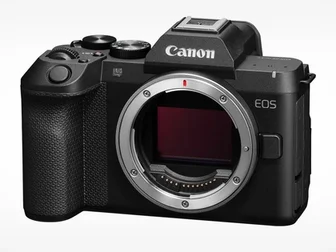
Canon EOS R8 Mark II: finally, IBIS
Read the full Canon EOS R8 II coverage on LensClear.
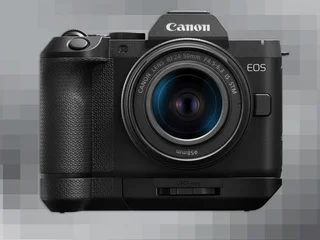
Canon announced the EOS R8 Mark II on September 15 with a $1,899 body price and a late-October ship date. The original R8 was a stripped-down body for shooters stepping up from phones or older DSLRs; the Mark II keeps that simple pitch and finally adds IBIS - which, frankly, was the missing piece. It also adds an AF joystick (a small thing, but the first R8 generation drove me crazy without one), 4K60 video, and what Canon is calling the lightest EOS body ever with IBIS inside.
The kit pairs with the new RF 24-50mm f/4.5-6.3 IS STM for $2,099. There is also an EG-E2 extension grip for $99.99. Whether you go body-only or kit probably depends on whether you already own a recent RF wide zoom - Canon is making the kit the obvious move for first-time full-frame buyers.
Sony FE 400mm F4.5 GM OSS and FE 600mm F6.3 GM OSS
Sony also dropped two new super-telephoto G Master primes on September 15, both shipping in October: the FE 400mm F4.5 GM OSS at $2,699.99 and the FE 600mm F6.3 GM OSS at $3,699.99. The pitch is that they are the lightest lenses in their respective focal-length and aperture classes - about a kilogram each, give or take, which compares very favorably against the Nikon Z 600mm f/6.3 PF VR S and similar large primes from Canon. Both are fully compatible with the Alpha 9 III at 120 fps with AF/AE tracking, which makes them genuinely interesting for bird and wildlife shooters who already own a Sony body.
My honest take: this is the category where every gram matters and Sony is clearly squeezing hard. Until now, a sub-kilo super-tele felt like a Sony fantasy. We covered the deeper breakdown in our
Friday News, September 18, so I will not re-litigate it here.
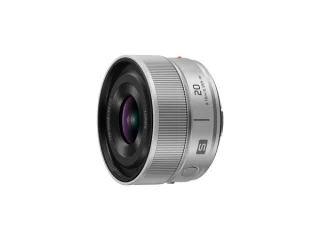
Panasonic LUMIX S 20mm F2.5 and an October firmware dump
Full breakdown: Panasonic LUMIX S 20mm F2.5.
On September 16, Panasonic quietly launched the LUMIX S 20mm F2.5 at $499.99, with shipping in October. It is a 142-gram weather-sealed wide prime with a 46mm filter thread - a real "throw it in the bag" piece for L-Mount shooters, and the first sub-$500 native ultra-wide we have seen in the system. Panasonic paired it with a free firmware wave for the S9, S1RII, S1II, and S1IIE that drops October 13, plus updates to the LUMIX Lab and LUMIX Flow apps.
For L-Mount owners who already have a body like the S5 II, this is the kind of low-key release that actually matters. Panasonic has been pretty disciplined on S primes lately and a $500 wide is overdue.
IBC 2026 aftermath: L-Mount finally gets third-party love
IBC ran September 11 to 14 in Amsterdam, and the headline for stills photographers - not just video shooters - was the L-Mount Alliance getting some real third-party depth. Viltrox used the show to extend its Air-series 14mm F4, 20mm F2.8, 40mm F2.5 and 50mm F2 primes to L-Mount, more than doubling its autofocusing L-Mount lineup in one go. We covered the full breakdown
here.
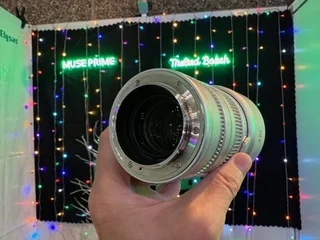
If you shoot a Panasonic S5 II or a Leica SL3 and have been waiting for affordable native L-Mount glass - Viltrox just changed the math. ELYSAS, the Chinese cinema-lens maker, also showed previews of MUSE Air Primes - smaller versions of its existing MUSE LF primes - for Sony E and Canon RF first, with Nikon Z and L-Mount planned later. The company did not announce pricing, but the MUSE LF primes are around $2,399 each so expect something around or under that for the new Air set when they ship toward the end of the year.
DZOFilm also showed a matching pair of Arles zooms - 25-75mm and 65-180mm, both T2.6, designed to be cut together on an A/B camera rig without a focal-length gap. They ship September 30, $2,899 per lens or $5,199 for the two-lens set. Fujinon used IBC to debut a UA16x4 portable 4K broadcast zoom and a development sample of the UA30x7.3, alongside the previously announced FUJINON UA94x8.7BESM 4K broadcast box zoom (94x ratio, 8.7mm to 818mm), which ships in mid-October. Broadcast glass, yes - but it is worth noting that the GFX Eterna 55 ecosystem keeps getting the lens and viewfinder support Fujifilm promised.
Camp Snap 110D: $74.95, no screen, on purpose
On September 17, Camp Snap announced the 110D, a digital point-and-shoot that finally matches the elongated 110-film silhouette people actually remember from the 1970s. The hook is the missing screen. There is no way to review your shot, no app, no immediate delete-and-retake loop. You get a Sony IMX179 8-megapixel sensor, a 4.2mm f/2.0 lens (roughly 26mm f/11.5 in full-frame terms), five on-camera filters, a USB-C port and a $74.95 price tag. Black or "Dreamsicle" colorways, pre-orders open now, ships mid-October.
If you have ever watched a kid (or yourself) spend more time reviewing a phone photo than taking it, the pitch is obvious. The 110D is not trying to compete with your phone - it is trying to get you to put the phone down. The PetaPixel coverage and Phoblographer take are both worth a read if you want the full hardware breakdown.
Also this week, briefly
Sony quietly unveiled the SEL814G, its first E-mount fisheye zoom in two decades - an 8-14mm f/3.5 G with circular fisheye at 8mm and diagonal fisheye at 14mm, 314 grams, $1,599.99 in October. Sigma continued the run-up to its 20-60mm F2.8-4 DG Contemporary launch on September 30. Nikon Cinema published its first roadmap teaser earlier in September and we covered that one separately.
My take
Reading this week as a whole, two threads stand out. First, "lightweight super-telephoto" is the new battleground - Nikon did it with the 600mm PF, Sony matched it this week, and Canon and Tamron will probably have to follow soon. If you shoot wildlife or sports at any system, your next lens is probably going to be lighter than you expect.
Second, L-Mount is genuinely a third mount to watch for the first time in years. Viltrox, Sigma, Tamron, Panasonic and Leica all pushing glass into the same pool means a Lumix S5 II or Leica SL3 buyer finally has a real native-lens roadmap. If you have been on the fence about L-Mount because the native catalog felt thin, this was probably the week that argument died.
That is the week. As always, the daily coverage on Canon, Sony and Panasonic goes deeper than this Roundup, so click through if you want the full spec sheets. Back Monday with more.