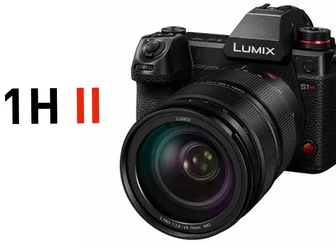
Executive Overview: The VariCam Heritage in Lumix Bodies
When cinematographers praise Panasonic video cameras—from the full-frame **Lumix S1H, S5 IIX, and BS1H** to the Micro Four Thirds **GH6 and GH7**—they rarely talk about megapixels. Instead, conversation centers on an elusive visual characteristic: **VariCam color science**.
Originally developed for Panasonic’s six-figure VariCam 35 broadcast and cinema cameras in Hollywood, Panasonic’s imaging pipeline differs fundamentally from consumer mirrorless color profiles. Rather than applying aggressive contrast and artificial digital sharpening to produce an instantly saturated video, Panasonic tunes its sensors for gentle highlight rolloff, linear middle-gray rendering, wide gamut preservation, and true analog **Dual Native ISO** readout circuits.
This technical engineering guide explores how Panasonic’s cinema color science operates, explains the mathematical curve of **V-Log and V-Gamut**, dissects how Dual Native ISO eliminates digital gain noise, and outlines best practices for post-production color grading in DaVinci Resolve.
The Physics of Dual Native ISO: Analog Circuits vs Digital Amplification
In standard digital camera sensors, there is only one "native" analog base sensitivity (typically ISO 100 or ISO 200). As you increase ISO to shoot in dimmer environments, the camera applies **digital gain** to amplify the small voltage signal generated by incoming photons. Crucially, amplifying a weak signal also amplifies the sensor’s baseline electronic noise floor, resulting in ugly digital grain and color blotching in shadows.
``` Standard Sensor Architecture (Single Base ISO): Light -> Photodiode -> [Single Analog Gain] -> Digital Amplifier (+Noise) -> ADC -> Video
Panasonic Dual Native ISO Architecture: Light -> Photodiode ─┬─> [Low Base ISO Circuit (ISO 640)] ──> Clean Daylight Dynamic Range └─> [High Base ISO Circuit (ISO 4000)] ──> Clean Low-Light Shadow Readout ```
The Dual Native ISO Circuitry:
Panasonic sensors incorporate **two independent analog amplifier circuits** at each pixel photodiode site before analog-to-digital conversion: 1. **Low Base Sensitivity (ISO 640 in V-Log):** Optimized for high saturation capacity. Photodiodes can collect maximum light before clipping, providing unmatched dynamic range in daylight and studio environments. 2. **High Base Sensitivity (ISO 4000 in V-Log):** When shooting in low light, the camera switches physically to the secondary analog circuit. Because this circuit requires far less post-amplification to achieve target exposure, shadow noise drops dramatically.
*Shooting Tip:* A shot captured at **ISO 4000** on a Lumix S1H or S5 II in V-Log is visibly cleaner than a shot captured at ISO 2500, because ISO 4000 utilizes the clean secondary circuit!
V-Log and V-Gamut: Mathematical Characteristics
To capture 14+ stops of dynamic range, a standard linear video curve (Rec.709) is completely inadequate, as it clips highlights beyond 6 stops over middle gray. Panasonic developed **V-Log and V-Gamut** to solve this:
Parameter | **Rec.709 (Standard Video)** | **V-Log / V-Gamut (Cinema Standard)**
**Dynamic Range** | ~6 to 7 stops | **14+ stops (VariCam Curve)**
**Middle Gray Target** | 40% – 45% IRE | **Exact 42% IRE (18% Reflectance Card)**
**Highlight Clipping** | 100% IRE | **Clips at 80% IRE in container** (Leaves headroom)
**Color Spectrum** | Covers standard sRGB | **Wider than BT.2020 and DCI-P3**
**Primary Advantage** | Ready for television without grading | High-latitude raw-like grading in post-production
``` Color Space Gamut Comparison: +-----------------------------------------------------+
V-Gamut (Widest Spectrum)
| BT.2020 |
| | DCI-P3 | |
| | | Rec.709 | | |
+-----------------------------------------------------+ ```
Because **V-Gamut** is wider than the full BT.2020 broadcast standard, it ensures that extreme spectral colors—such as saturated police car strobes, deep neon signs, and subtle golden hour skin undertones—never mathematically clip into color distortion.
The Optical Low-Pass Filter (OLPF) Mandate in Cinema
While consumer camera manufacturers frequently strip optical low-pass filters to boast about synthetic test-chart sharpness, cinema cameras like the **Lumix S1H** deliberately retain a custom **anti-aliasing low-pass filter (OLPF)**.
In high-resolution digital video, repeating patterns (such as fine houndstooth fabric, actor suit weaves, or architectural window grids) that exceed the Nyquist frequency of the sensor produce severe, shimmering **chromatic moiré**. An in-camera OLPF gently attenuates frequencies beyond the sensor's sampling rate, ensuring smooth, organic cinema motion without unsightly digital artifacts.
Professional Post-Production Workflow for Lumix V-Log
To grade Panasonic V-Log footage correctly in **DaVinci Resolve**: 1. **Color Management Setup:** Use **DaVinci YRGB Color Managed** with color science set to *DaVinci Wide Gamut / Intermediate*. Set Input Color Space to **Panasonic V-Log/V-Gamut**. 2. **Official LUT Transformation:** If using standard node workflows, download the official **Panasonic 3D LUT (V-Log to Rec.709)** from Panasonic's professional support portal and apply it on the final output node. 3. **Exposing Middle Gray on Set:** Use the in-camera **Waveform Monitor** or **False Color**. Place a calibrated 18% gray card at your subject's face and dial exposure until the waveform indicates exactly **42% IRE**.
Summary: Why VariCam Color Endures
Panasonic’s commitment to VariCam color science is the reason Lumix cameras punch far above their price class in professional cinema environments. By combining true **Dual Native ISO hardware circuits**, the massive latitude of **V-Log/V-Gamut**, and deliberate optical low-pass filtering, Panasonic provides independent filmmakers with a Hollywood-grade imaging pipeline in rugged mirrorless bodies.