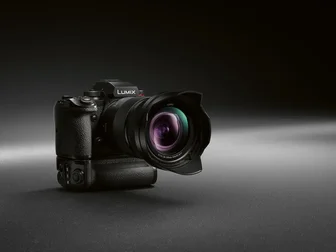
Executive Overview: The High-Resolution Full-Frame Horizon
The original **Panasonic Lumix DC-S1R** established an enduring standard for full-frame photographic resolving power when it launched in 2019. Its 47.3-megapixel sensor, free of an optical low-pass filter, delivered exceptional per-pixel sharpness, while its 187-megapixel tripod High-Resolution mode became a staple for fine-art and architectural photographers.
However, with the mirrorless landscape evolving toward **Phase Hybrid Autofocus**, high-speed sensor readouts, and 8K hybrid workflows, user and industry attention has centered on what a next-generation **Lumix S1R II** architecture requires to compete at the absolute top of the market.
This technical analysis examines the sensor engineering, thermal dissipation demands, bandwidth requirements, and market positioning necessary for a high-resolution L-mount flagship in 2026.
The Four Architectural Pillars of an S1R II
``` +-------------------------------------------------------------------------+
Core Engineering Demands for S1R II
+-------------------------------------------------------------------------+
| |
v v v v [ 44MP–60MP BSI ] [ Phase Hybrid AF ] [ Handheld High-Res ] [ Active Cooling ] Dual Gain Output 779+ Phase Points 176MP–200MP RAW Unlimited 8K/6K High-Speed Readout AI Subject Tracking Motion Compensation Isolated Sealed Fan ```
1. Sensor Resolution: 44MP vs 61MP Backside-Illuminated (BSI)
To deliver true generational progress over the original 47.3MP S1R, an S1R successor must utilize a modern **Backside-Illuminated (BSI) CMOS architecture**. - A 44MP to 47MP sensor allows native **8K (7680 x 4320)** recording without pixel binning or severe crop factors. - Moving to a 61MP sensor (similar to the Sony A7R V or Sigma fp L) maximizes static resolving power for landscape and commercial studio advertising, allowing massive crops while maintaining commercial-grade resolution. - Crucially, BSI architecture positions wiring behind the photodiode layer, significantly improving edge-of-frame light gathering with wide-angle L-mount lenses.
2. Phase Hybrid Autofocus with AI Recognition
The original S1R's Contrast DFD autofocus was its primary commercial hurdle. An S1R II must feature Panasonic's **Phase Hybrid AF system (779 or more on-sensor PDAF points)** paired with advanced deep-learning subject recognition algorithms for humans, animal eyes, cars, trains, and aircraft. For high-resolution photography, where even a millimeter of focus error is painfully obvious on a 47MP+ canvas, phase detection is non-negotiable.
3. Handheld High-Resolution Sensor Shift (176MP+)
On the original S1R, generating a 187MP file required a massive, rock-solid tripod; any shutter vibration or wind ruined the capture. Following the breakthrough in the Lumix G9 II, an S1R II requires **Handheld High-Resolution Mode**. By taking advantage of high-speed sensor readouts and gyroscopic compensation, the camera can capture 8 micro-shifted exposures handheld and merge them into an ultra-clean **176MP to 200MP RAW file** with automatic motion compensation for foliage and moving water.
4. 8K Video Bandwidth & Active Cooling
Generating 8K 30p or 4K 120p from a 45MP+ full-frame sensor creates extraordinary data throughput and heat. Competitor cameras like the Canon EOS R5 or Sony A7R V suffer from thermal shutdowns during extended high-resolution video capture. Panasonic’s patented **active cooling fan system** (integrated into the EVF housing) is essential to provide unlimited, continuous recording for commercial productions.
High-Resolution Flagship Benchmark: How S1R II Fits the Industry
Feature / Metric | **Panasonic Lumix S1R (2019)** | **Sony A7R V** | **Nikon Z8** | **Projected S1R II Benchmark**
**Sensor Resolution** | 47.3MP Standard CMOS | 61.0MP BSI-CMOS | 45.7MP Stacked CMOS | **45MP – 61MP BSI-CMOS**
**Autofocus Tech** | Contrast DFD (225 pts) | Fast Hybrid PDAF (693 pts) | Phase Detect (493 pts) | **Phase Hybrid AF (779+ pts)**
**Continuous Burst** | 9 fps (AF-S) / 6 fps (AF-C) | 10 fps | 20 fps RAW / 30 fps JPEG | **15 – 30 fps (Electronic)**
**High-Res Mode** | 187MP (Tripod only) | 240MP (Tripod + PC merge) | None (In-camera) | **176MP+ Handheld In-Camera**
**Video Capability** | 4K 60p (1.09x crop) | 8K 24p / 4K 60p | 8K 60p N-RAW internal | **8K 30p / 6K Open Gate**
**Thermal Cooling** | Passive (Uncooled) | Passive (Thermal throttles) | Passive | **Active Cooling Fan (Unlimited)**
**Card Media** | 1x CFexpress B + 1x SD | 2x CFexpress A / SD combo | 1x CFexpress B + 1x SD | **1x CFexpress B + 1x SD (or Dual B)**
Market Positioning & Expected Launch Realities
For commercial photographers, architectural shooters, and landscape artists, the high-resolution segment remains vital. When Panasonic introduces its high-resolution PDAF flagship, expect it to carry: - An official launch MSRP in the **$3,400 to $3,900 USD range**, competing directly with the Sony A7R V and Canon EOS R5 Mark II. - Direct-to-SSD USB-C recording, eliminating the high cost of CFexpress memory cards for long-form studio tethering. - Comprehensive L-Mount Alliance lens optimization, drawing upon Leica SL APO primes and Sigma Art series glass to fully resolve 50MP+ sensors.