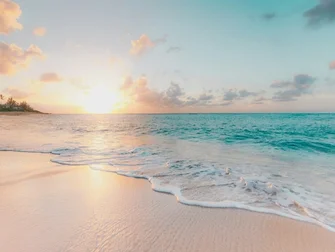
Man, I almost didn't write this. Golden hour is one of those things that every photographer on Instagram pretends to have figured out, and honestly? Most of them are just standing around in good light and calling it technique. I've been shooting outdoors for years now — my main setup is the GH7 with the OM 12-40 f/2.8 PRO II — and I still get caught flat-footed by golden hour more often than I'd like to admit.
This isn't a polished tutorial. It's a field guide. The kind of thing I'd tell a friend who kept showing up at 11am for a 'sunset portrait session' and wondering why everything looked harsh. Read it once, then go shoot.
What golden hour actually is (and why your photos look so good in it)
Quick science bit so we're on the same page. When the sun is high in the sky, light hits your subject from almost straight above — short, hard shadows, squinty eyes, blown-out highlights, and that weird flat contrast that makes everyone look like they're in a passport photo. As the sun drops toward the horizon, the light has to travel through a lot more atmosphere. Blue wavelengths scatter out, which is why the sun goes orange and the shadows go long.
Practically: the light becomes directional, soft-ish, and warm. Skin tones look better. Textures pop. You get natural rim lighting. It is, genuinely, the single most flattering light source on the planet. The only catch is that you've got maybe 30-45 minutes of usable light on a clear day, and the transition is fast.
Pro tip: there's also golden hour at sunrise. Sunrise light is technically the same physics but it tends to be a touch cooler and quieter. If you want the 'punchy magazine' look, shoot sunset. If you want the 'soft and contemplative' look, shoot sunrise. Both are great.

Timing is everything — and "golden hour" is a misnomer
Here's the part that trips people up. 'Golden hour' is not actually an hour. It's roughly 20-40 minutes of usable light, depending on latitude, time of year, and how picky you're being. In summer near the equator, the window can shrink to 15 minutes. In winter at higher latitudes, you might get an hour.
My workflow for timing a shoot:
1. I check sunrise/sunset time for the location on PhotoPills or the Photographer's Ephemeris.
2. I subtract 45 minutes. That's my arrival time. Not my 'start shooting' time — my 'get there' time.
3. I plan to actually shoot for about 20-30 minutes. The very first and last 5 minutes are usually the most dramatic.
Honestly if you're showing up 5 minutes before sunset you've already lost. By the time you set up a tripod, find your composition, dial in your exposure — the sun's gone. Plan to be bored and ready before the light shows up.
Camera settings that actually work for golden hour
I'll keep this simple. Stop overthinking it. The light is changing fast, you need a setup that adapts.
My defaults on the GH7 for outdoor portraits during golden hour:
• Aperture: f/2.8 to f/4. Wide enough to blur the background, narrow enough to keep both eyes sharp.
• Shutter: 1/250 minimum for handheld. If I want motion in hair or fabric, I drop to 1/125 and brace.
• ISO: Auto, max 1600. The GH7 handles 1600 cleanly. If I need to push higher I will, but I don't love it.
• White balance: I shoot RAW and leave WB on Auto, then adjust in post. If I'm shooting JPEG, I lock WB to 'cloudy' or 'shade' (around 6000-6500K) to keep the warmth.
• Metering: Evaluative/Matrix most of the time, but I'll switch to spot metering if the backlight is really strong and I want the subject's face perfectly exposed.
Yeah it's there but whatever — full manual is fine too, just takes longer to adjust between shots. Aperture priority gets you 90% of the way there.

The three light directions that actually matter
Forget the 47 different lighting diagrams you see online. For golden hour there are really only three setups worth learning, and you can move between them in like 10 seconds.
1. Backlight (sun behind your subject)
This is the money shot. Put the sun behind your subject, slightly off to one side, and let the warm light wrap around their head and shoulders. You'll get a glowing rim of light on their hair, soft falloff on their face, and a slightly hazy 'sun-kissed' background.
Two ways to expose this: expose for the face (face will be bright, background will be slightly blown out and warm) or expose for the background (face will be in shadow, moodier look). Most of the time I expose for the face and recover the background in post.
Watch out for lens flare — it's gorgeous if you want it, annoying if you don't. A lens hood helps, or just cup your hand above the lens to block the sun.
2. Front light (sun behind you, hitting the subject)
This is the classic 'well-lit portrait' look. Easy, flattering, but kind of boring if that's all you do. The light is even, the colors are warm, the shadows fall behind the subject so you don't see them.
Best for: kids, groups, anyone who can't keep their eyes open in direct sun. Worst for: drama, depth, anything that needs mood.
3. Side light (sun to the side of your subject)
The 'texture' light. Sun comes in from the left or right, half the face is lit, half is in shadow. You get every pore, every eyelash, every wrinkle. Looks amazing on older subjects, dramatic on everyone, but it's not forgiving on skin.
I use this when I want the shot to feel 'real' rather than polished. The shadows add depth. The face has dimension. The catchlights tell a story.

Composition tricks that don't feel like cheats
A few things I keep coming back to:
• Use the long shadows. They lead the eye. Get low to the ground so the shadow stretches into your foreground.
• Backlight + a dirty foreground (grass, leaves, water droplets) gives you natural bokeh + sun stars.
• Shoot slightly into the sun for a 3-stop dynamic range scene. Expose for the midtones, let the sky and shadow side fall where they fall.
• Wide angles (16-24mm equivalent) emphasize the sky. Longer focal lengths (50-85mm) compress and bring out that warm haze.
• Don't center the sun. Off-center it, ideally at a rule-of-thirds intersection, and let it be a secondary element in the frame.
Common mistakes (the ones I keep making)
I'll be honest. I have made all of these mistakes in the last six months.
• Showing up 8 minutes before sunset. Every time. Even after I tell myself 'arrive 45 minutes early'.
• Forgetting to clean my front element. The sun + dust = hazy mess. Wipe it before you start.
• Shooting at f/16 for 'sun stars.' Yes you get stars, no you don't get the look you wanted because everything's also underexposed. f/8 to f/11 is the sweet spot.
• Not shooting into blue hour. After the sun is technically below the horizon, you have another 20-30 minutes of gorgeous soft blue + warm horizon light. Don't pack up the second the sun disappears.
• Trusting the LCD in bright light. The screen lies at golden hour. Check the histogram or chimp a shot. I have underexposed entire shoots because the LCD looked 'fine' but the actual file was 2 stops dark.
What I'd actually pack for a golden hour shoot
Keep it light. You're going to be moving fast.
• One body, one prime. The 35mm f/1.4 or 50mm f/1.4 covers 90% of what I need. I used to bring three lenses, I now bring one and I'm happier.
• Reflector (5-in-1, 32-inch). Bounce a little fill light back into the face when backlighting. Massive upgrade for almost no effort.
• Lens cloth. See above. Clean the glass.
• Headlamp. Not for shooting — for walking back to the car when the light dies. Red light mode is best, doesn't kill your night vision.
• One extra battery. The cold (or the LCD brightness) eats them faster than you'd think.
Real talk: my best golden hour shots
Last month I was out at a beach at golden hour with the GH7 and the 12-40, wind blowing sand everywhere, sun dropping behind the rocks, and a friend was asking me to shoot her running toward the camera. I needed to make quick ISO and aperture changes between frames. The GH7's dual base ISO felt invisible — not in a 'wow amazing' way, but in a 'this just worked' way. I wasn't thinking about the gear. I was thinking about her expression, the wind, the moment she hit the sand.
That's the test for any gear. Does it disappear when the light is good and the moment is real? My GH7 with the 12-40mm f/2.8 PRO II does that. Some fancier setups don't.
If you're shooting golden hour on a phone — modern phones are actually surprisingly good at it. Use portrait mode for subject separation, lock exposure on the face by long-pressing, and shoot in RAW if your phone supports it. You'll be fine.
The takeaway
Golden hour is not magic. It's just sunlight at a low angle, which happens to be the most flattering light humans ever evolved under. You don't need expensive gear. You need to be there before the light, willing to shoot for 20 minutes, and paying attention to direction and timing.
Read this once. Then go outside tomorrow, 45 minutes before sunset, and shoot whatever you see. Don't bring a list. Don't overthink it. Just shoot.
Reference reading: the Adobe golden hour guide has solid background info on the science, and the SLR Lounge article breaks down 10 practical tips that line up with most of what I just said.
For the science side, Adobe has a solid breakdown here.
And SLR Lounge covers the field tips in more detail if you want a second opinion.