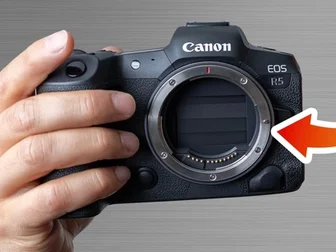
A court ruling in China this summer that most camera buyers never heard about is now reverberating through the entire third-party lens industry, and the loudest impact could fall on Canon. PetaPixel's Jaron Schneider laid out the chain on September 26, and once you follow the legal reasoning it's hard to unsee: if Nikon just lost the right to enforce its Z-mount patent against Viltrox in China, Canon doesn't have a meaningfully stronger legal position to keep its RF mount closed.
The chain starts with a January lawsuit Nikon filed against Viltrox in China, alleging the Shenzhen-based lens maker had violated Nikon's intellectual property around the Z-mount and seeking royalties and damages. Viltrox fought back. This past summer, the China National Intellectual Property Administration didn't just side with Viltrox — it invalidated one of Nikon's core Z-mount design patents outright. The patent covered specific aspects of the Z-mount's physical bayonet tabs, terminal pins, and electronic layout. CNIPA ruled that Nikon lacked an "inventive step" — the Chinese legal equivalent of the U.S. "non-obviousness" standard — and that minor adjustments to bayonet lug lengths, angles, or pin arrangements over existing camera mounts constituted routine engineering, not patentable innovation.
The ruling is narrow in scope but wide in implication. CNIPA's reasoning explicitly drew from the way Nikon's Z-mount differs from Nikon's own older F-mount: the court found that those differences, while real, weren't novel or inventive enough to warrant patent protection. That line of logic lands hard on Canon. The RF mount's physical geometry and pin arrangement are derived in part from Canon's earlier EF and EF-M mounts. If CNIPA can invalidate a Nikon patent on those grounds, the same reasoning applied to Canon's RF patents would almost certainly produce the same result. Viltrox, asked for comment by PetaPixel, declined to share any forward-looking statement but notably did not gloat about the precedent — a restraint that suggests the company understands exactly how much leverage the ruling has handed it.
The precedent matters because Canon is the only major camera maker still operating a truly closed mirrorless mount. Nikon already licenses Z-mount to a growing list of third parties. Sony E-mount is broadly open. L-Mount Alliance partners share their spec with Sigma, Panasonic, Leica, and others. Canon alone restricts RF autofocus lenses to its own lineup plus a small handful of licensed partners. Schneider's read is that if Chinese third-party brands — Viltrox, but also the long tail of smaller makers that don't always make Western headlines — can now legally produce AF RF-mount glass, Canon is staring at a choice it has been able to defer for years: open the mount officially, or watch the unofficial reverse-engineered catalog grow in China while Japanese partners like Sigma and Tamron lose out and lobby hard from inside CIPA for a more orderly opening.
Canon still has levers. Schneider notes the company could pursue firmware blocks requiring encrypted handshakes between lens and body — Sony has gone down this road, with mixed consumer reactions. Canon could also lean on non-patent IP like firmware copyright. None of those are as durable as a clean patent win, and they tend to frustrate users who don't understand why their third-party lens suddenly loses functionality on a firmware update. The cheaper legal option is also the more legally fragile one.
What I'd want to see next is whether any Chinese lens maker actually files the test case. Viltrox now has a confirmed win on a directly analogous fact pattern; it doesn't need to be the plaintiff to know what CNIPA is likely to do. If a single AF RF-mount lens from a small Shenzhen brand shows up on a marketplace in the next six months, that's the signal. Until then, nothing on Canon's spec sheets or pricing pages changes, but the strategic ground has shifted under their feet. For anyone invested in the Canon RF system — especially shooters who have been waiting on a Sigma 35mm f/1.4 Art or a Tamron 70-180 f/2.8 equivalent for RF — this is the most consequential non-news story of the year. The market is about to make the decision Canon has been refusing to make.