Executive Overview: The Convergence of Stills and Cinema
For decades, camera manufacturers maintained a strict division between photographic lenses and cinema glass: - **Still lenses** prioritized ultra-fast autofocus speed, compact barrels, and lightweight stepping motors, but suffered from severe focus breathing, stepped electronic aperture adjustments, and varying physical sizes. - **Cinema lenses** featured clickless mechanical iris rings, zero focus breathing, and unified front diameters for follow-focus rigs, but were heavy, purely manual focus, and cost $5,000 to $25,000.
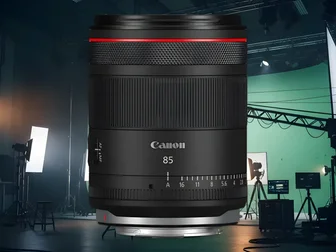
With the expansion of its **Hybrid RF L-Series Primes**—including the RF 24mm f/1.4 L VCM, RF 35mm f/1.4 L VCM, RF 50mm f/1.4 L VCM, and RF 85mm f/1.4 L VCM—Canon dismantled this barrier. By integrating revolutionary **Voice Coil Motors (VCM)** alongside Nano USM actuators, adding a dedicated **clickless physical iris ring**, and standardizing external chassis dimensions, Canon engineered a unified optical family built equally for commercial photographers and solo cinematographers.
This technical guide examines the dual-actuator engineering behind VCM technology, explains the mechanics of optical focus breathing suppression, and details the production advantages for Cinema EOS and hybrid mirrorless workflows.
The Dual-Actuator Revolution: Voice Coil Motors (VCM) + Nano USM
Moving optical elements in a fast f/1.4 lens is a massive mechanical challenge. The front and rear glass elements are physically large, thick, and heavy.
Traditional ultrasonic ring motors (Ring USM) move heavy glass efficiently but create audible mechanical hum and rotational friction that audio microphones can pick up. Stepping motors (STM) are quiet but lack the instant torque required to rapidly stop heavy glass elements during fast action bursts.
``` Canon Hybrid Dual-Actuator Optical Architecture: +-----------------------------------------------------------+
[ FRONT LENS GROUP ] -> Light Input
[ FLOATING GROUP ] -> Driven by NANO USM (High Speed)
[ HEAVY REAR GROUP ] -> Driven by VCM (Voice Coil Motor)
(Linear Magnetic Levitation)
+-----------------------------------------------------------+ ```
How the Voice Coil Motor (VCM) Works:
A **Voice Coil Motor (VCM)** operates on the same magnetic levitation principles that drive high-end audio speakers: 1. A permanent magnet surrounds a high-density copper wire coil attached directly to the rear focusing optical group. 2. When electric current passes through the coil, a magnetic Lorentz force moves the glass group linearly along the optical axis with **zero mechanical gear teeth and zero rotational friction**. 3. **The Result:** Completely silent, instantaneous linear movement with zero backlash and zero audible vibration on video microphones. 4. Paired with a secondary **Nano USM motor** driving the smaller floating elements, the dual-actuator system achieves lightning-fast eye-tracking autofocus for stills and velvety-smooth, cinematic focus racks for video.
Key Hardware Innovations of the Hybrid RF Lineup
Feature | Engineering Mechanism | Practical Filmmaking Advantage
**Physical Iris Ring** | Smooth, clickless manual aperture collar on lens barrel | Enables smooth, 1/32-stop aperture pulls during live video recording without exposure steps.
**Near-Zero Focus Breathing** | Advanced optical floating element compensation | Framing does not change or "zoom" when racking focus between foreground and background.
**Unified 67mm Filter Thread** | Standardized front filter diameter across all primes | Share one set of expensive variable ND, CPL, or mist filters without step-up rings.
**Identical Gimbal Balance** | Matched center of gravity, physical length, and weight (~580g) | Swap from 24mm to 35mm to 50mm to 85mm on a motorized gimbal without rebalancing motors.
**Customizable Lens Function Button (L-Fn)** | Side-mounted programmable barrel button | Program for AF-lock, zebra toggle, or eye-tracking switch directly under your left thumb.
Why Cinema EOS Crossover Matters
For production companies operating mixed camera packages—such as a **Canon Cinema EOS C70 / C80 / C400** as the primary A-camera and an **EOS R5 Mark II / R6 Mark II** as the B-camera—the Hybrid RF primes solve major logistical headaches:
1. **Native Iris Control Across Platforms:** In video mode, the physical iris ring functions seamlessly across both Cinema EOS cinema bodies and standard EOS R mirrorless cameras, giving operators muscle-memory consistency. 2. **Matching Optical Color and Contrast:** Because the lenses share identical optical coatings (Air Sphere Coating ASC and Subwavelength Structure Coating SWC) and glass formulas, footage cuts together seamlessly in post-production with zero color matching discrepancies between focal lengths. 3. **Weather-Sealed Magnesium Construction:** Engineered with full rubber gasket seals around the mount, dials, and front barrel, surviving rain, desert dust, and production rig abuse.
Summary & Investment Verdict
Canon’s Hybrid RF VCM prime series represents one of the most intelligent optical investments in the modern mirrorless market. By solving the historical compromises of video autofocus noise, focus breathing, and gimbal rebalancing, Canon delivered an uncompromised prime lineup that serves as a high-speed still photography tool by day and a Hollywood-grade cinema prime by night.