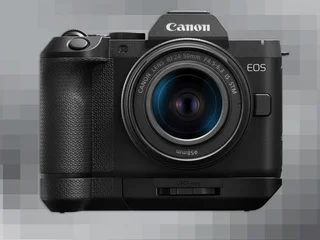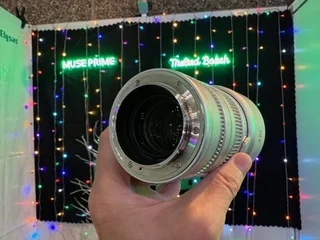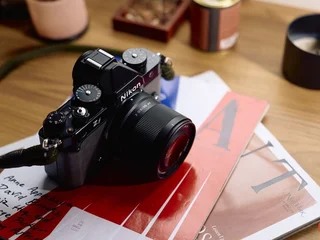
Brightin Star just officially dropped their MF 14mm f/2.8 today — the manual-focus ultra-wide the company had been teasing for the past few weeks. It's a full-frame lens covering four mounts (Sony E, Nikon Z, Leica L, Canon RF), aimed squarely at landscape, architecture, interior, and astrophotography shooters who want that 116° field of view without selling a kidney.
PetaPixel has the full announcement covered here: petapixel.com/2026/06/17/brightin-stars-new-14mm-f-2-8-lens-promises-high-end-astro-photos.
The actual specifications
Now that the launch is live, the spec sheet is genuinely interesting for the price point:
- Focal length: 14mm
- Maximum aperture: f/2.8
- Field of view: 116°
- Optical construction: 13 elements in 9 groups
- Special elements: 2 aspherical, 5 high-refractive-index, 3 extra-low-dispersion (ED)
- Coating: Star Nano IMC multi-layer coating
- Aperture blades: 10 (round-ish, for starburst effects)
- Minimum focus distance: 20cm (close-focusing for foreground emphasis)
- Filter support: 82mm square ND and CPL filter holders (the holder doubles as a lens hood)
- Pricing: $240 introductory (June 17–27), $280 regular retail after
For a $240 ultra-wide with 13 elements and three ED glass elements, that's a serious spec sheet on paper. The 10-blade aperture is also a nice touch — stopped down to f/8 or f/11, that should produce pronounced 10-point starbursts around bright light sources, which is exactly what astro shooters want for landscape astrophotography.
What Brightin Star is targeting
Reading between the lines of the press materials, this lens is built for a specific type of shooter: someone who already owns a full-frame mirrorless body, doesn't want to pay $1,400+ for a Sigma 14mm Art, and is comfortable focusing manually. That's a smaller audience than Brightin Star's cheaper 7Artisans-style lenses, but it's a real one. Astrophotographers in particular have been waiting for an affordable ultra-wide with this kind of coverage and a wide aperture.
The 116° field of view is genuinely wide — wider than most "wide angle" zooms and right up against the limit of what most cameras can cover without heavy vignetting correction. The 20cm close-focusing capability is mentioned, and the built-in 82mm square filter holder (which doubles as a lens hood) is a thoughtful design choice for landscape shooters who want to drop in an ND or polarizer without adapter rings.
Mount coverage and pricing context
Four mount options — Sony E, Nikon Z, Leica L, Canon RF — is generous for a third-party lens in this segment. A lot of the cheaper ultra-wides cover only one or two mounts, which locks out a chunk of buyers. Brightin Star covering all four at launch means the lens is going to show up in shopping carts across the entire full-frame mirrorless ecosystem.
At $240-$280, this is firmly in budget-territory. For comparison:
- Sigma 14mm f/1.8 DG DN Art: ~$1,400 (the gold standard, much wider aperture)
- Rokinon / Samyang 14mm f/2.8: ~$300-$500 (manual focus, similar concept)
- Tamron 11-20mm f/2.8 Di III-A: ~$900 (zoom, but APS-C only)
- Brightin Star MF 14mm f/2.8: $240-$280 (manual focus, full-frame, 4 mounts)
That's a crowded market, but Brightin Star is undercutting the obvious competitors while adding the 4-mount coverage that none of the others have at this price.
Why this matters (or doesn't)
Honestly, I'm a bit torn on whether this is a big deal. On one hand, Brightin Star has been putting out genuinely interesting glass over the past year — their 35mm f/1.8 and 50mm f/2 are well-regarded in the budget-photography community, and the optics on those are genuinely competitive with lenses costing 3x as much. If they hit the same notes on the 14mm f/2.8, it'll be a real option for landscape shooters who don't need autofocus.
On the other hand, manual focus at 14mm is challenging. Even with focus peaking, you're going to nail critical focus maybe 80% of the time, and the 20% you miss will be unforgiving — at f/2.8 on a 14mm, depth of field is razor-thin if your subject is closer than a few meters. This is not a lens for casual use. It's a specific tool for a specific job.
If you're an astro shooter already invested in a full-frame mirrorless body, this is worth a long look. If you're a generalist who wants a wide-angle to mess around with, wait for the first batch of reviews and see how the coma and edge sharpness actually hold up in real-world samples.
My honest take
I'll be watching the first review samples closely. Brightin Star has earned enough credibility that I'm willing to give them the benefit of the doubt, but a 14mm f/2.8 with this field of view is a tall order — there's a reason the established brands charge $1,400+ for their equivalents. If the optical quality holds up, this could be a serious option for the budget-conscious landscape crowd. If it has the typical budget-lens corner softness and heavy distortion, it'll be a passing curiosity.
Either way, more competition in the ultra-wide space is good for photographers. The more options between $240 and $1,400, the harder it is for the big brands to keep charging premium prices for incremental improvements.