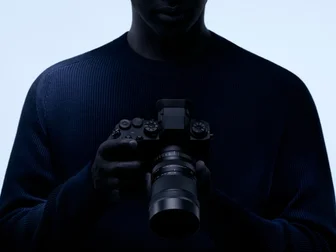
Sigma's 50-120mm F2.8 DC OS Contemporary Closes the APS-C F2.8 Trinity at $799
Sigma dropped the third and final piece of its APS-C F2.8 zoom trio today. The new 50-120mm F2.8 DC OS Contemporary covers roughly 75-180mm in full-frame terms, ships at 390g on Sony E and Fujifilm X (410g on Canon RF), and lands at US dealers on October 22 for $799 — making it the cheapest of the bunch by a clear margin. It joins the 10-18mm F2.8 DC DN and the 18-50mm F2.8 DC DN to give crop-sensor mirrorless shooters a complete constant-F2.8 trio from one third-party maker.
What stands out first is the weight. At 390g on E and X mounts, the 50-120mm is meaningfully lighter than the Fujifilm XF 50-140mm F2.8 R LM OIS WR — the closest native equivalent — which Camera Decision clocks at 995g. A roughly 2.5× weight gap on a tele zoom in the same focal range is not a small thing for anyone carrying the lens all day on a wedding or a trip. Sigma also shares the 55mm filter thread across the trio, so the 18-50mm and the 50-120mm accept the same circular polarizers and NDs without step-up rings.

The spec sheet reads cleanly for video work as well. Sigma is using its HLA linear motor for autofocus, the same one the company has shipped in its recent DN and DG lenses, and the official product page lists "minimal focus breathing" alongside 6.5 stops of optical stabilization at the wide end (4.5 at the long end). The lens also gets an aperture ring — a small detail that photographers have asked Sigma to add to its Contemporary APS-C zooms for years. Per the Sigma press release, this is the first APS-C zoom in the Contemporary line to include one, with de-click options for video shooters who want smooth transitions.

The price is the part that will land hardest. At $799 USD (€799 / £699), the 50-120mm is cheaper than most current 70-200mm F2.8 zooms designed for full-frame bodies, full stop. That has implications for how people build kits. A Sony a6700 or Fujifilm X-T5 shooter can now carry the full Sigma trio — 10-18, 18-50, and 50-120 — for roughly 935g total (255g + 290g + 390g). For comparison, a Sony FE 24-70mm F2.8 GM II alone weighs 695g and does not reach telephoto.
I have not handled this lens yet, so I can't speak to its rendering or focus speed in the field. What the spec sheet and the press materials support is a clear positioning: Sigma is selling the trio as a system, not three standalone products. The shared 55mm filter thread, the matching HLA motors, and the matched F2.8 aperture all point to a single APS-C body paired with a lightweight kit for travel and event work.
Whether Canon, Sony, or Fujifilm will ever ship their own native F2.8 zooms in this size class is a separate question. The native alternatives that do exist — Fujifilm's XF 50-140mm, Canon's RF-S 75-150mm — are larger and more expensive. Sigma has been quietly closing this gap since the 18-50mm launched in 2021, and the 50-120mm is the piece that turns the trio from "a clever wide and standard" into a complete travel system.
Dealers get stock on Thursday, October 22, 2026. Full press release on the Sigma site; product page at sigma-global.com/en/lenses/c026_50_120_28.
