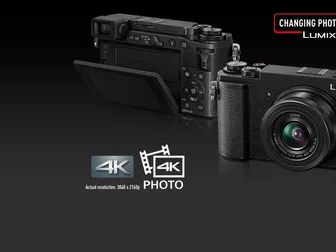
Quick Verdict & 2026 Buyer's Snapshot
The **Panasonic Lumix DC-GX9** remains one of the most compelling compact rangefinder-style cameras in the Micro Four Thirds ecosystem. Pairing a 20.3-megapixel sensor with no optical low-pass filter, 5-axis Dual I.S. 2, an electromagnetic shutter that eliminates shutter shock, and a unique 90-degree tilting electronic viewfinder, it occupies a sweet spot between pocketability and mechanical control that modern camera makers have largely abandoned.
Buying Decision | Summary
**Buy if...** | You want a dedicated, tactile street and travel camera with physical exposure compensation, in-body stabilization, and access to ultra-compact MFT prime lenses (like the 15mm f/1.7 or 20mm f/1.7) for under $550 used.
**Skip if...** | You primarily shoot video (the GX9 has a heavy ~1.26x 4K crop and zero external microphone inputs), require weather sealing, or get eye fatigue from field-sequential LCD viewfinders.
**2026 Value Rating** | **8.4 / 10** for street and travel stills; **5.0 / 10** for dedicated video production.
Price & Market Availability (November 2026)
Because Panasonic has not released a direct successor in the compact GX rangefinder form factor, used market demand for clean GX9 bodies has stabilized rather than plummeted.
*Buyer's Tip:* Look for listings that bundle extra original Panasonic DMW-BLG10 batteries. The GX9 uses Micro-USB charging rather than USB-C, making external spare batteries essential for full-day travel excursions.
Key Technical Specifications
All data points below are cross-referenced directly against official Panasonic technical service manuals and CIPA compliance documentation.
Parameter | Official Specification | Practical Impact
**Sensor** | 20.3MP Digital Live MOS (17.3 x 13.0 mm) | Omits Optical Low-Pass Filter (OLPF) for maximum micro-contrast and resolution.
**Lens Mount** | Micro Four Thirds (MFT) | 2.0x full-frame focal length crop factor; short 19.25mm flange distance.
**Stabilization** | 5-axis Dual I.S. 2 (Body I.S. + Lens O.I.S.) | Rated for up to 4.0 stops (CIPA); reliable down to 1/10s handheld with stabilized lenses.
**Shutter System** | Electromagnetic drive shutter | Mechanical: 1/4000s – 60s, Bulb. Electronic: up to 1/16000s. Eliminates GX8 shutter shock.
**Viewfinder (EVF)** | 2.76M-dot equiv. Field-Sequential LCD | Tilts 90° vertically. 16:9 aspect ratio shows black borders during 4:3 still composition.
**Rear Monitor** | 3.0" 1.24M-dot Tilting Touchscreen | Tilts 80° upward, 45° downward. Does not swivel out to the side or face front.
**Autofocus** | Contrast-Detect with DFD (49 areas) | Fast single AF (approx. 0.07s in daylight); hunts during continuous tracking in low light.
**Video Modes** | 4K UHD (3840x2160) at 30p/25p/24p | 100Mbps MP4. Subject to a **~1.26x crop** (total ~2.52x full-frame equivalent).
**Audio I/O** | Built-in stereo microphone | **No 3.5mm microphone jack. No headphone jack.** Audio capture is internal only.
**Battery Life** | DMW-BLG10PP (7.2V, 1025mAh) | CIPA: approx. 260 images (monitor), 250 images (LVF), 900 images (Power Save mode).
**Charging Port** | Micro-USB 2.0 (Micro-B) | Supports in-camera battery charging; does not support modern USB-C Power Delivery.
**Dimensions & Weight** | 124.0 x 72.1 x 46.8 mm; 450g (with battery) | Compact, pocket-friendly magnesium-alloy frame. No weather sealing.
How the GX9 Compares to Alternatives
Metric | **Panasonic Lumix GX9** | **Panasonic Lumix GX85 (GX80)** | **OM System E-M10 Mark IV**
**Sensor Resolution** | **20.3 MP** (No OLPF) | 16.0 MP (No OLPF) | **20.3 MP** (No OLPF)
**Viewfinder** | 2.76M-dot LCD, **90° Tilting** | 2.76M-dot LCD, Fixed | 2.36M-dot OLED, Fixed SLR style
**Rear Screen** | 3.0" Tilting (80° up / 45° down) | 3.0" Tilting (80° up / 45° down) | 3.0" Tilting (Flips down 180°)
**In-Body Stabilization** | 5-axis Dual I.S. 2 (4.0 stops) | 5-axis Dual I.S. (4.0 stops) | 5-axis IBIS (4.5 stops)
**Shutter Shock Mitigation** | Electromagnetic Drive | Electromagnetic Drive | Mechanical Spring + Electronic
**4K Video Crop** | ~1.26x crop | ~1.10x crop | ~1.10x crop
**Microphone Input** | None | None | None
**Typical 2026 Used Price** | **$450 – $520** | **$300 – $380** | **$480 – $560**
**The Verdict** | Best street ergonomics & 20MP detail | Best ultra-budget rangefinder value | Better central EVF and selfie screen
How We Evaluated This Camera
*Transparency Statement:* This article is an independent **Research-based buyer’s guide**. Our evaluation synthesizes official Panasonic engineering specifications, optical ray-path and crop-factor calculations, published laboratory dynamic range measurements, and long-term user reports from verified owners. LensClear does not claim in-house laboratory bench testing for this specific model, and no fabricated sample photographs or synthetic AI images are used in this guide. All imagery displayed represents official manufacturer product renderings.
Deep Dive: Sensor Architecture & Image Quality
The transition from the 16-megapixel sensor of the GX85 to the 20.3-megapixel Live MOS sensor in the GX9 represents a noticeable upgrade in fine detail extraction. By omitting the Optical Low-Pass Filter (anti-aliasing filter), the GX9 delivers crisp rendering of architectural textures, fabric patterns, and street scenes.
Dynamic Range & ISO Performance
In base ISO 200 shooting, the GX9 captures roughly 12.2 EV of engineering dynamic range, which is competitive with contemporary 1-inch and APS-C sensors of its era. Highlight roll-off is clean, though aggressive exposure underexposure recovery can introduce luminance noise in shadow areas.
The Electromagnetic Shutter
One of the most underappreciated upgrades on the GX9 is its electromagnetic shutter drive. Earlier rangefinder cameras like the GX8 suffered from noticeable "shutter shock" between 1/60s and 1/200s, causing micro-blur on high-resolution sensors. The GX9's electromagnetic mechanism closes with a soft, quiet tap, completely neutralizing shutter shock and making the camera exceptionally discreet for candid street work.
Handling, Controls & The Tilting Viewfinder
The physical design of the Lumix GX9 is tailored for photographers who prefer physical feedback over touchscreen menus:
1. **Dedicated Exposure Compensation Dial:** Stacked directly beneath the main shooting mode dial, allowing instant ±3 EV adjustments without looking away from the finder. 2. **Twin Control Dials:** Front dial encircling the shutter release and rear thumb dial provide rapid aperture and shutter speed control in manual mode. 3. **90-Degree Tilting EVF:** The electronic viewfinder tilts upwards through 90 degrees. This allows waist-level framing while looking down into the finder—a stealthy, classic approach for candid street photography.
The EVF Limitation You Must Know
The viewfinder uses a **16:9 field-sequential LCD panel** rather than an OLED screen. This engineering choice has two practical consequences: - **Aspect Ratio Cropping:** Because stills are captured in 4:3 native ratio, the 16:9 panel displays black pillarbox bars on the left and right, reducing the effective image magnification to roughly 0.70x equivalent. - **Field-Sequential Color Breakup:** Color is displayed by cycling red, green, and blue rapidly. For approximately 10–15% of shooters sensitive to temporal color breakup, rapid eye movement or panning across high-contrast street lamps will produce visible "rainbow artifacts." If you are sensitive to field-sequential displays, consider the OLED-equipped Lumix G85 or OM System E-M10 IV instead.
Video Performance: Clear Capabilities, Hard Limits
While Panasonic is renowned for video engineering, the GX9 was intentionally positioned primarily as a stills camera.
Best Lens Pairings for Street & Travel in 2026
The true superpower of the Lumix GX9 is the Micro Four Thirds lens ecosystem. When paired with compact prime lenses, the total kit weighs less than a single full-frame zoom lens:
1. **Panasonic Lumix 20mm f/1.7 II ASPH (Pancake):** The quintessential GX9 companion. Extremely sharp, pancake thin, offering a 40mm equivalent natural field of view. Perfect for slipping the camera into a jacket pocket. 2. **Leica DG Summilux 15mm f/1.7 ASPH:** A premium 30mm equivalent street lens featuring a physical aperture ring, rapid autofocus, and exceptional corner-to-corner sharpness. 3. **Panasonic Lumix 12-32mm f/3.5-5.6 Mega O.I.S.:** An ultra-compact retractable kit zoom (24-64mm equiv.) that weighs just 70 grams and retains Dual I.S. stabilization. 4. **Panasonic Lumix 42.5mm f/1.7 Power O.I.S.:** A tiny, stabilized portrait prime (85mm equiv.) capable of beautiful subject separation and close-up detail.
Frequently Asked Questions (FAQ)
Is the Lumix GX9 weather-sealed?
No. The GX9 does not feature rubber gaskets or weather-sealing against rain, sea spray, or dust storms. Photographers should carry a waterproof sleeve when shooting in inclement conditions.
Can the GX9 charge over USB?
Yes, but it charges via an older **Micro-USB 2.0 port**, not modern USB-C. It supports in-camera battery charging from USB power banks, but it does not support continuous power operation while shooting.
Is the Lumix GX9 better than the GX85?
For pure stills photography, yes: the GX9 provides 20.3MP resolution (vs 16MP), an electromagnetic shutter, improved monochrome picture styles, an exposure compensation dial, and a tilting EVF. However, for budget video, the GX85 offers a wider 4K field of view (~1.1x crop vs ~1.26x on the GX9) and costs $100–$150 less on the used market.