Five of eleven.
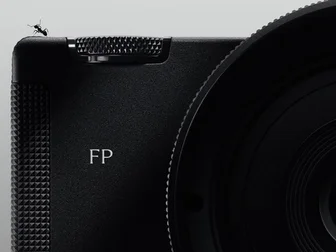
That is the number that stuck with me. Map Camera, one of Japan's biggest camera retailers, has published its latest sales figures and said that out of the eleven biggest camera launches of 2026, five are sitting on backorder right now. The Sigma FP2. The OM System PEN. The Panasonic Lumix L10. The Sony FX5. The Ricoh GR IV Monochrome.
Five out of eleven. Forty-five percent.
Read that again, because the shape of it is strange. We have spent three years talking about the camera market dying, and in some ways it is — CIPA's September numbers, released this week, put overall shipments at 95.7 percent of last year across all categories, and DSLRs down at 64.5 percent. On paper, this is a shrinking industry.
And yet five of the year's eleven biggest cameras can't be shipped to people who want to buy them. Demand went down. Supply went down harder. That's not a market problem, it's a distribution problem — and the two look completely different depending on which side of the transaction you're standing on.
Machine-translated out of the Japanese, Map Camera attributed the drop in its sales to "factors such as a decrease in supply from manufacturers and a delay in the launch of new products compared to initial projects." Read that last clause again. It isn't "people stopped buying." It's "the products aren't turning up on schedule." A retailer does not lose revenue to a supply problem the same way it loses revenue to a demand problem.
The memory bill is coming due

Here is the part that isn't a rumour. I went straight to Canon's own investor relations document — the Q&A summary from its third-quarter FY2026 analyst meeting, published October 27 — and the company is not vague about it. Asked directly whether supply shortages would keep driving costs up in 2027, Canon answered: "For components that are in short supply, we are using every possible means to secure the quantities we need for next year. As a result, we expect higher procurement costs, but our policy is to offset those increases through price increases from next year onward."
That is the world's largest camera maker telling you, in its own filing, that camera prices go up in 2027 and that it intends to pass the cost through rather than eat it. The same document notes Canon has "not been able to fully pass on higher memory and raw material costs through pricing" so far — 2026 was already absorbing some of this, and 2027 is when it lands.
The part that surprised me: compacts can't get built either
I assumed the shortage story was a full-frame story. Expensive bodies, expensive sensors, expensive memory buffers, small production runs. The excuse writes itself. Then I read Canon's Q14 answer, about why it had lowered its sales plans for compact cameras, and the assumption fell over. Canon's answer: "For compact cameras, component supply has not kept pace with strong demand. This is temporary, however, and we expect the situation to improve gradually."
Compact cameras. The category that was supposed to be the growth story — CIPA has compacts up 15.4 percent year on year so far, roughly 1.9 million units shipped from Japan, and Canon says its own compact camera sales grew more than 50 percent in the third quarter alone.
But last quarter Canon said it would raise compact production again in the second half of 2026 to chase that demand, with cameras like the PowerShot G7 X Mark III backordered at many retailers. Now the company has lowered its sales plans for compacts, because the components aren't there.
A PowerShot G7 X Mark III is not a $2,199 cinema body. It's a fixed-lens compact, and it still can't get built. That tells you the bottleneck isn't exotic. It's chips and boards every manufacturer needs, and the AI build-out has been buying up the same ones. Canon also notes it has secured the memory components it needs for the rest of the year — so memory is a 2027 pricing problem, and something else entirely is a supply problem right now.
So what should you actually do
If you've been waiting on a specific body, the maths just changed. Before this, a backorder meant you were waiting behind a queue. Now it might mean you are waiting behind a queue that doesn't move until component supply catches up, and Canon's own guidance is that it improves "gradually" — not "next month." If you're shopping for something that launched this year and it's unavailable, waiting is a reasonable strategy rather than a cop-out.
If you've been putting money aside for a 2027 body, this is the argument for buying sooner. Canon's stated policy is price increases from next year onward, and the drift across the industry is the same direction. On the manufacturers' own filings, the money you spend in 2026 buys more camera than the same money in 2027 will.
If you shoot Micro Four Thirds, I want to say something personal, and carefully. My main body is a Panasonic GH7 and my walk-around lens is the OM SYSTEM 12-40mm f/2.8 PRO II. That combo has been my daily carry since early 2025, through rainy Hong Kong streets and run-and-gun work, and I have zero interest in replacing it. But the L10 and the PEN are both in that backorder list, and both are Micro Four Thirds bodies — one from Panasonic, one from OM System, the two brands that built this mount in the first place.
I owned an Olympus Pen-F once, years ago, and shot street work through Hong Kong with it before selling it on. The PEN is named after that line of cameras. The new one has a viewfinder and a price under a thousand dollars, and I have not held it, so I'm not going to pretend to know how it feels in the hand. But the fact that the two brands keeping the Micro Four Thirds mount alive are both shipping product I can't buy tells you something about where the constraint sits. It isn't in the smaller formats. It's upstream of everybody.
Which also explains what otherwise looks contradictory. Shipments are down across the board, and yet compacts are up 15.4 percent and the backorder list is full. The industry isn't making fewer cameras because nobody wants them. It's making fewer cameras because it can't get the parts, and the parts are scarcer precisely where demand is spiking.
The numbers I'd keep
Forty-five percent. Five of the eleven biggest camera launches of 2026 have hit backorders in at least one region.
Price increases from next year. Canon's own words: its policy is to offset higher procurement costs "through price increases from next year onward."
95.7 against 96.9. Overall shipments at 95.7 percent of last year, but production at 96.9 percent. Production didn't fall as far as sales did. The gap is the part of the year where cameras were built but didn't reach buyers, and it's the closest thing to a measurement of what the shortage actually cost.
None of this is a forecast. I don't know how bad 2027 gets, and the people who do aren't saying. What I do know is that the question has flipped. It used to be whether the camera market was dying. Now it's what happens when a market that isn't dying can't get built — and the honest answer is that I don't know yet, because nobody's been through this part before.