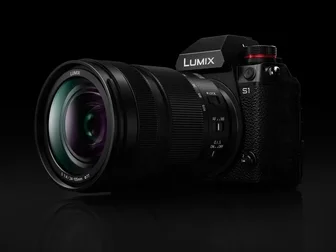
**Historical Archive Notice:** This document analyzes Panasonic engineering statements regarding high-framerate video pipelines and the long-term replacement cycle for the flagship Lumix S1 full-frame series.
The Engineering Challenge: Why Full-Frame 120P Demands Time
In the mirrorless camera market, videographers frequently ask why 4K 120p and 6K 60p video capabilities take years to transition from specialized cinema bodies to hybrid stills-and-video cameras.
In historical engineering interviews, Panasonic product leaders addressed this directly when discussing development priorities for successors to the original Lumix S1 and S1H: **achieving uncropped high-framerate full-frame capture requires overcoming severe data throughput and thermal dissipation hurdles.**
Three Technical Bottlenecks in Flagship Full-Frame Video
1. Massive Sensor Readout Throughput
A 24-megapixel full-frame sensor running at 120 frames per second must read out all 24 million photodiodes in roughly **8.3 milliseconds**. On conventional non-stacked CMOS sensors, reading data that quickly without introducing severe rolling shutter distortion requires: - Massively parallel Analog-to-Digital Converters (ADCs) integrated directly onto the sensor silicon. - Multi-lane PCIe or sub-LVDS digital interfaces capable of sustaining raw data streams exceeding **30 Gigabits per second**.
2. Thermal Wattage & Power Consumption
Processing 120 frames of 10-bit 4:2:2 video every second generates significant heat inside the camera chassis. - While compact bodies (like the Lumix S5 II or S9) utilize passive copper heat-pipes or miniature forced-air vents around the EVF to sustain 4K 60p, **continuous 4K 120p demands roughly double the thermal dissipation wattage**. - Without a heavy active cooling turbine (similar to the chassis architecture introduced in the Lumix S1H and GH6/GH7), the camera will trigger thermal safety shutoffs within 10 to 15 minutes of continuous shooting.
3. Dual Native ISO & Dynamic Range Tradeoffs
High sensor readout speeds often require shortening the analog sampling window, which can elevate noise floors and compromise dynamic range. Panasonic’s engineering focus has consistently prioritized **14+ stops of usable V-Log latitude** over delivering headline frame rates with compromised image fidelity.
The Evolution of the Lumix L-Mount Architecture
Panasonic's full-frame strategy has followed a clear, calculated progression:
1. **Phase 1 (2019–2020): Mechanical Foundations.** The S1, S1R, and S1H established best-in-class chassis durability, dual card slots (CFexpress + SD), top-tier EVFs (5.76M-dot OLED), and active cooling, but were hampered by contrast-detect DFD autofocus. 2. **Phase 2 (2023–2024): Phase Hybrid AF Integration.** The S5 II and S5 IIX solved the autofocus bottleneck with on-sensor Phase Detection (779 AF points), moving the entire L-mount lineup into mainstream creator adoption. 3. **Phase 3: High-Speed Hybrid Processing.** Successors to the flagship S1 line combine on-sensor phase detection with high-speed BSI/stacked sensor architectures, enabling true broadcast-tier 120p without heavy crops.