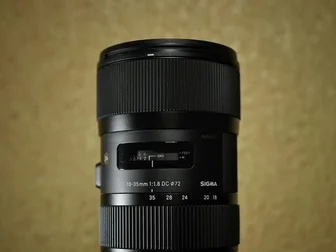
I’ve been shooting with Panasonic cameras for years — currently rocking a GH7 as my daily driver — and I’ve watched the lens market shift dramatically. But CP+ 2026 just dropped something I didn’t expect: Sigma actually delivered. The 35mm f/1.4 DG II Art is 20% lighter than its predecessor while keeping that gorgeous Art-series sharpness. Meanwhile, Sony’s a7 IV just snagged PCMag’s “Best Overall Full-Frame Camera” for 2026. So what’s actually worth your money this month? Let me break it down.
What Happened and What’s Actually Confirmed
CP+ 2026 just wrapped in Yokohama, Japan, and honestly? This year’s show felt different. For the first time in years, we didn’t see a flood of new camera bodies. Instead, it was very clearly the Year of the Lens. Every major manufacturer — Sigma, Tamron, Brightin Star, Voigtländer, 7Artisans — brought their A-game with glass announcements.
The big story? Third-party lenses are no longer playing second fiddle. Sigma dropped not one, not two, but several major announcements. The Sigma 35mm f/1.4 DG II Art is now 20% lighter than the original — that’s huge for a lens that already weighed 1.2 kilograms. They also confirmed development of an 85mm f/1.2 DG Art for full-frame, which is basically a portrait photographer’s dream (or nightmare, depending on your wallet). And for APS-C shooters, the new Sigma 15mm f/1.4 DC Contemporary gives you an ultra-wide f/1.4 beast that’s perfect for astrophotography and architecture.
Over on the camera side, Sony’s a7 IV just got crowned PCMag’s Best Overall Full-Frame Camera for 2026, replacing the Nikon Z6III. That’s a big deal because the a7 IV isn’t exactly new — it’s been out since 2021. But Sony’s continued firmware improvements and the camera’s versatile 33MP full-frame sensor keep it relevant.
The Sigma 35mm f/1.4 DG II Art — 20% lighter, same legendary sharpness
What’s Genuinely New (Not Marketing Fluff)
Let’s be real: most “new” camera gear is just incremental upgrades dressed up in marketing speak. But Sigma’s announcements this year actually move the needle.
The Sigma 35mm f/1.4 DG II Art isn’t just a refresh — it’s a complete optical redesign. The weight reduction from roughly 1,200 grams to around 960 grams might not sound massive on paper, but when you’re shooting weddings for 10 hours or hiking with this thing, every gram counts. Sigma achieved this through improved housing design and optimized glass elements without sacrificing that signature Art-series sharpness.
The 85mm f/1.2 DG Art is even more exciting. Sigma has never made an 85mm f/1.2 before — this is uncharted territory for them. Canon has the RF 85mm f/1.2L and Sony has the FE 85mm f/1.4 GM, but neither hits f/1.2. If Sigma can deliver that wide aperture with Art-series sharpness at a lower price point than the competition, this could be the portrait lens of the year.
And for you APS-C shooters (like me, on my GH7), the Sigma 15mm f/1.4 DC Contemporary is a game-changer. That’s a 15mm f/1.4 on APS-C — equivalent to roughly 22.5mm full-frame. You get massive wide-angle coverage with a bright aperture for low-light work. Think astrophotography, interior real estate shots, or dramatic landscape ultrawides. At f/1.4, you can actually shoot stars without stacking exposures.
Sigma’s 85mm f/1.2 DG Art — the fastest 85mm Sigma has ever made
Specs → Real-World Impact
Okay, let’s talk about what these specs actually mean for your photography. Numbers on a spec sheet don’t tell the whole story.
Sigma 35mm f/1.4 DG II Art:
Weight: ~960g (down from ~1,200g)Aperture: f/1.4Filter size: 67mmMounts: Sony E, Canon EF, Nikon F, L-Mount, Sigma SAAutofocus: Stepping motor (quiet and fast)
Real-world impact: The 35mm f/1.4 is the workhorse of any photographer’s kit. It’s wide enough for environmental portraits, tight enough for street photography, and fast enough for indoor events. The weight reduction makes this lens viable as an everyday walkaround lens — previously, the original was just too heavy for casual use. If you’re shooting weddings, events, or documentary work, this is your new best friend.
The 35mm f/1.4 is perfect for indoor wedding photography — fast AF and gorgeous bokeh
Sigma 15mm f/1.4 DC Contemporary specs:
Focal length: 15mm (APS-C)Aperture: f/1.4Weight: ~500gFilter size: N/A (bulbous front element)Mounts: Sony E, Canon EF-M, Fujifilm X, Nikon DX, Micro Four Thirds
Real-world impact: This lens fills a massive gap in the APS-C market. Previously, if you wanted wide astrophotography on APS-C, you were looking at manual-focus lenses or slower zooms. The 15mm f/1.4 gives you that fast aperture in an autofocus design. The catch? No filter threads means you’ll need clip-on filters forNDs or polarizers. Worth it for the shots you’ll get.
Shoot the Milky Way at f/1.4 — this lens is a game-changer for astrophotographers
Upgrade Math: Who Should Buy, Who Should Hold
Let’s get practical. Not everyone needs every new lens that drops. Here’s who should open their wallet and who should wait.
Buy the Sigma 35mm f/1.4 DG II Art if:
You’re still shooting the original 35mm f/1.4 Art (2012 vintage)You want a versatile prime but find the original too heavyYou’re building a new system from scratchYou shoot events, weddings, or street photography professionally
Hold off if:
You already own the Sigma 35mm f/1.4 DG DN Art (2020) — the weight savings are incrementalYou’re on a tight budget — the original still performs excellently usedYou prefer zooms over primes
Buy the Sigma 15mm f/1.4 DC Contemporary if:
You shoot astrophotography on APS-CYou need a wide-angle prime for architecture or interiorsYou’re upgrading from kit zooms
Hold off if:You already have a fast ultrawide zoomYou need filter threads (this lens doesn’t have them)Is the upgrade worth it? Here’s your honest breakdownSmall Print: Compatibility, Workflow, Hidden CostsBefore you drop cash, know the gotchas.
Mount compatibility: The Sigma 35mm f/1.4 DG II Art comes in all major mounts, but if you’re switching systems, factor in the cost of adapter rings. Sony E-mount users get the best deal — native mount, no adapter needed.
Filter threads: The 35mm f/1.4 DG II uses 67mm filters — common and affordable. The 15mm f/1.4 Contemporary has no filter threads, so budget extra for clip-on NDs if you need them.
Firmware updates: Sigma lenses need the USB Dock for firmware updates. If you’re on Mac with USB-C only, grab a USB-A adapter. This is a workflow annoyance but necessary for keeping your glass up to date.
Weather sealing: Both lenses feature dust and splash resistant construction, but don’t go dunking them in water. They’re not fully waterproof — just weather-resistant.
Concerns, Missing Info, Skepticism
I’m genuinely excited about these lenses, but I have questions.
Price: Sigma hasn’t officially announced pricing for the 35mm f/1.4 DG II Art or the 85mm f/1.2. If the 85mm comes in above $1,500, it’ll be a tough sell against the Canon RF 85mm f/1.2L at $2,299. We need to see the actual price tag.
85mm f/1.2 release date: Sigma only “confirmed development” — no ship date yet. Could be Q3 2026, could be later. Don’t pre-order until you see final pricing and reviews.
Autofocus performance in video: The stepping motor in the 35mm should be quiet, but we haven’t tested it extensively in video workloads. If you’re a hybrid shooter, wait for real-world autofocus tests.
Third-party lens firmware bugs: We’ve seen issues with third-party lenses and body firmware updates (looking at you, Tamron 35-150mm and Sony a7V). Make sure Sigma commits to ongoing firmware support.
If I Were Spending My Own Money This Week
Here’s the honest truth: if I were spending my own money this week, I’d grab the Sigma 35mm f/1.4 DG II Art in a heartbeat. As a Panasonic GH7 user on L-Mount, this is exactly the lens I’ve been waiting for. The original Art 35mm was legendary but weighed a ton — the weight reduction makes it practical for everyday use.
For APS-C shooters, the Sigma 15mm f/1.4 DC Contemporary is the more exciting pick. There’s literally nothing else like it on the market — a fast ultrawide prime for APS-C with autofocus. If you shoot landscapes, astrophotography, or interiors, this lens pays for itself in one trip.
Wait on the 85mm f/1.2 — we need to see real-world samples and pricing before recommending it. Same goes for the Sony a7 IV if you already have a recent full-frame body. It’s still the best all-rounder in 2026, but if you’re coming from an a7 III or a7 IV original, the upgrade isn’t essential.
New glass, new possibilities — here are my honest buying recommendations
Let’s Talk — CTA
CP+ 2026 proved one thing: the lens market is hotter than ever. Third-party manufacturers are no longer playing catch-up — they’re leading innovation. Whether you’re on APS-C or full-frame, there’s something here for you.
What’s your take? Are you team Sigma, or waiting for more reviews? Drop your thoughts in the comments — I read every single one.
And if you want more gear recommendations, we’ve got you covered: check out our Panasonic Lumix S 100-500mm review for L-Mount telephoto options, or browse our full Leica SL3-P rumors coverage if you’re in the market for a high-resolution system camera.
For more lens reviews, check out our Sigma 15mm f/1.4 review.