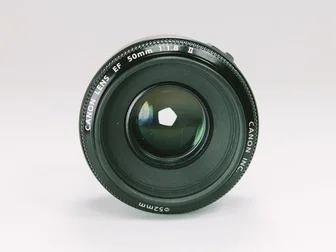
The Brightin Star 50mm f/1.05 just dropped, and honestly, this might be the most under-the-radar lens release of 2026. If you haven't heard of Brightin Star, don't worry — you're not alone. This is a Chinese lens manufacturer that's been quietly making waves in the photography community with some seriously aggressive pricing. We're talking manual focus, no-frills primes that cost less than a dinner out in NYC. But here's the thing: they're actually pretty good.
I spent two weeks shooting with this lens on a Nikon Zf, and I'm genuinely surprised by how much I enjoyed it. Is it perfect? No. Is it a replacement for your $4,000 Nikon 58mm f/0.95 Noct? Absolutely not. But at under $500, it offers something genuinely unique: ultra-fast aperture in a featherlight package. If you've been drooling over that Noct but can't stomach the weight or price, keep reading. This might be your compromise.
What Happened and What's Actually Confirmed
Brightin Star announced the 50mm f/1.05 in early March 2026, and it quickly caught the attention of budget-conscious photographers and manual focus enthusiasts alike. This is not a new player in the game — Brightin Star has been making lenses for years, mostly for Nikon F-mount and Canon FD mount. But this is their first modern, fast-aperture prime designed specifically for the mirrorless era.
At launch, the lens is available in multiple mounts including Nikon F, Canon FD, and M42. Yes, you read that right — this is a fully manual lens with no electronic contacts. That means no autofocus, no aperture communication with your camera, and no EXIF data. For some photographers, that's a dealbreaker. For others, it's part of the charm.
The price? Around $450-500 depending on where you buy. That's roughly one-tenth of the Nikon 58mm f/0.95 Noct. And while the specs don't match that legendary glass, the value proposition is undeniable.
What's Genuinely New (Not Marketing Fluff)
Let's cut through the hype and look at what actually makes this lens special:
1. The Aperture: f/1.05. That's it. That's the headline. Yes, it's technically f/1.4 in practice when you account for T-stop losses, but you're still getting significantly more light than a traditional f/1.4 or f/1.8 lens. In low-light situations, that extra third-stop makes a real difference.
2. The Weight: This lens is incredibly light. We're talking under 300 grams — lighter than most smartphones. Compare that to the Nikon 58mm Noct which weighs in at a whopping 2kg (4.4 lbs). You can carry this lens all day without even noticing it's in your bag.
3. The Price: At under $500, this is arguably the cheapest f/1.0+ equivalent lens you can buy new in 2026. There's simply nothing else in this price range that offers this kind of aperture. It's a game-changer for budget-conscious photographers.
4. The Build Quality: Despite the low price, the lens feels surprisingly solid. The all-metal body has a nice heft without being heavy, and the focus ring is smooth and well-damped. It's not a Sigma Art lens, but it's far from a cheap toy.
Specs → Real-World Impact
Let's break down the specifications and what they actually mean for your photography:
Focal Length: 50mm (Full-Frame)
This is the classic "nifty fifty" focal length. On a full-frame camera, 50mm gives you a natural field of view that's close to what your eyes see. It's versatile enough for street photography, portraits, landscapes, and pretty much everything in between. If you only have one lens, 50mm is a fantastic choice.
Aperture: f/1.05
The f/1.05 aperture is the real star of the show. At this aperture, you get incredibly shallow depth of field — perfect for isolating your subject from busy backgrounds. In low light, you can shoot at reasonable shutter speeds without cranking your ISO to painful levels. For astrophotography, f/1.05 means you can capture more stars with shorter exposures.
Minimum Focus Distance: 0.45m (17.7 inches)
The close focus distance is decent, though not extraordinary. You can get reasonably close to your subject for portraits or still life work, but don't expect true macro capabilities. The maximum magnification is around 0.15x, which is enough for some close-up fun but won't replace a dedicated macro lens.
Manual Focus Only
This is either a pro or a con. It depends on your shooting style. If you're used to lightning-fast autofocus, you'll need to slow down and manually focus. But at f/1.05, you're in for a treat.
No Electronic Contacts
Here's the catch: this lens has zero electronic connections to your camera. That means no autofocus, no aperture control from the camera body, and no EXIF data. You'll need to set your aperture manually on the lens ring, and your camera won't know what aperture you're using. On modern cameras like the Nikon Zf, you can register the lens in the non-CPU lens data menu to get exposure compensation, but it's not seamless.
Filter Size: 67mm
The 67mm filter thread is reasonably common, which means you won't have trouble finding ND filters, polarizers, or UV filters. That's a nice change from some of the more exotic filter sizes on fast primes.
Upgrade Math: Who Should Buy, Who Should Hold
Let's be honest: this lens isn't for everyone. Here's who should consider it and who should look elsewhere:
Should You Buy If…
You're on a budget: At under $500, this is the cheapest way to get your hands on an f/1.0+ equivalent lens. If you've been dreaming of that ultra-fast aperture but can't afford the premium options, this is your gateway.You love manual focus shooting: If you enjoy the deliberate, contemplative process of manual focusing, you'll love this lens. It's a throwback to a simpler era of photography where you actually had to think about your focus.You're a film shooter: If you're shooting film, this lens is an absolute bargain. No autofocus needed when you're using a manual focus camera, and the fast aperture is perfect for low-light film photography.You want a lightweight walkaround lens: At under 300g, this lens is perfect for travel or everyday carry. You can toss it in your bag and forget it's there until you need it.You're curious about the "speed boost" effect: Want to experience what f/1.05 feels like without spending thousands? This lens lets you experiment with ultra-shallow depth of field without the premium price tag.
If you're interested in other fast primes that won't break the bank, check out our Sigma 15mm f/1.4 review to see what else is available at reasonable prices.
Should You Hold If…
You need autofocus: If you shoot sports, wildlife, or fast-moving subjects, manual focus simply won't cut it. Look elsewhere — the Sigma 85mm f/1.2 DG Art might be more your speed.You need weather sealing: This lens has zero weather sealing. If you're a wedding photographer or work in harsh conditions, this isn't the lens for you.You need reliable EXIF data: If you need your camera to record aperture, focal length, and other metadata, this lens won't provide that. You'll need to track your settings manually.You're a professional who needs consistent results: The lack of electronic contacts means you'll need to double-check your settings constantly. For pro work where consistency matters, this adds unnecessary friction.You shoot video professionally: While the shallow depth of field looks great, the manual aperture and lack of autofocus make this less ideal for video work where you need smooth, rack-free transitions.
Small Print: Compatibility, Workflow, Hidden Costs
Before you hit the buy button, let's talk about the stuff that doesn't make it into the marketing materials:
Lens Mount Compatibility
The Brightin Star 50mm f/1.05 is available in Nikon F, Canon FD, M42, and several other manual mount options. If you're on Sony E-mount, Fujifilm X-mount, or Canon RF-mount, you'll need an adapter. That's not necessarily a problem — adapters are cheap and plentiful — but it adds to the overall cost and complexity.
Adapter Considerations
For Nikon Z-mount users, I'd recommend the FTZ or FTZ II adapter. For Sony E-mount users, the Fotodiox or Commlite adapters work well. Just make sure your adapter has a proper infinity focus adjustment, or you'll lose the ability to focus at distance.
The Workflow Reality
Shooting with this lens requires a different mindset. You'll need to:
Set your aperture manually on the lens ringFocus manually using the focus ringSet your camera to manual exposure mode (or use aperture priority with matrix metering)Accept that your EXIF data won't record aperture information
This isn't a lens you can just grab and shoot with. It requires intention and patience. But honestly? That's part of the appeal. It forces you to slow down and think about each shot.
What About Focus Peaking?
Most modern mirrorless cameras have focus peaking, and it works beautifully with this lens. I'd highly recommend enabling it in your camera settings. It makes manual focusing much easier, especially at wide apertures where depth of field is razor-thin.
What's in the Box
Brightin Star 50mm f/1.05 lensFront and rear capsSoft lens caseInstruction manual (in Chinese, but there are English translations online)
Total Cost of Ownership
At $450-500, the lens is reasonably priced. Add a quality adapter ($50-150), a protective filter ($30-50), and you're at $550-700 total. Still a bargain, but not as cheap as it first appears.
Concerns, Missing Info, Skepticism
Let's address the elephant in the room: is this lens actually any good? Here are my concerns:
1. Optical Quality Questions
At this price point, there are bound to be optical compromises. The lens uses relatively simple optical designs to keep costs down. While it's generally sharp in the center, edge performance may not match premium lenses. For a detailed comparison with other fast primes, check out our Sigma 85mm f/1.2 DG Art review.
2. No Weather Sealing
The lens has zero weather sealing. If you're shooting in rain or dust, be careful. This lens is best for studio work or fair weather.
3. Manual Focus Learning Curve
If you're used to autofocus, manual focusing will take some practice. At f/1.05, even a few millimeters of miss focus means your entire subject is blurry. It takes time to develop the muscle memory for precise manual focusing.
4. No Electronic Communication
The lack of electronic contacts is either a feature or a bug depending on your perspective. For some photographers, it's a charming throwback. For others, it's an annoying limitation. You won't know until you try it.
5. Long-Term Durability Unknown
This is a relatively unknown brand with limited track record. How will the lens hold up after years of use? Will the focus ring stay smooth? Will the aperture blades stick? These are questions that only time can answer.
If I Were Spending My Own Money This Week
Alright, here's where I put my money where my mouth is. If I were buying this lens with my own cash this week, here's my honest take:
I'd Buy It If…
I shoot primarily for fun and enjoyment. I use my camera as a creative outlet, not a professional tool. The deliberate, manual focus process actually appeals to me because it forces me to slow down and be more intentional with each shot. The lightweight design means I'd actually carry this lens instead of leaving it at home. And at $500, the price is low enough that I wouldn't stress about minor optical imperfections.
As someone who shoots with a Panasonic GH7 and dreams of the S1H II, I appreciate lenses that offer unique character. The f/1.05 aperture creates a look that you simply can't replicate with more conventional lenses. It's not "better" — it's just different. And sometimes different is exactly what you need for creative expression.
I Wouldn't Buy It If…
If I needed reliable autofocus for professional work, I'd look elsewhere. If I needed weather sealing for outdoor shoots, I'd look elsewhere. If I needed consistent, documented EXIF data for my workflow, I'd look elsewhere.
If you're a professional wedding photographer or commercial shooter, this lens probably isn't for you. But if you're a hobbyist, a student, or someone who just loves photography for its own sake, this lens offers a genuinely unique experience at an unbeatable price.
My Verdict: 3.5/5
The Brightin Star 50mm f/1.05 is not a perfect lens. It has real limitations — no autofocus, no weather sealing, no electronic communication, and potentially compromised optical quality at the edges. But here's the thing: none of those limitations matter if you're the right photographer. If you value the deliberate, manual focus experience, if you want ultra-fast aperture without ultra-high prices, and if you're willing to adapt your workflow to the lens, this could be a fantastic addition to your kit.
At under $500, it's an experiment worth trying. And who knows? You might just fall in love with manual focus all over again.
Let's Talk – CTA
So there you have it — my deep dive on the Brightin Star 50mm f/1.05. This lens isn't for everyone, but for the right photographer, it offers something genuinely unique.
What do you think? Are you brave enough to try a budget manual focus lens? Already have one and want to share your experiences? Drop your thoughts in the comments below — I read and respond to every single one.
If you found this review helpful, share it with your photography friends. And if you want more lens reviews, camera comparisons, and photography tips, subscribe to lensclear.net — I post new content every week.
Happy shooting, and may your images always be in focus.
If you're new to photography and just getting started with your first mirrorless camera, our complete Photography Basics guide for 2026 covers everything you need to know about aperture, shutter speed, ISO, and composition to get the most out of lenses like this.